
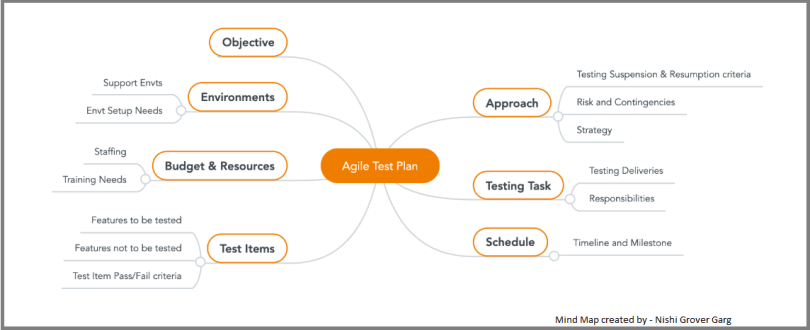
Mind maps are a creative way of gathering ideas around a central theme and categorizing them in concrete branches. Mind maps can be useful for both personal and professional life as an organization and visualization technique. They’re descriptive, easy and even fun.
In my latest post for Gurock blog, I showcase the usage of mind maps as a technique for test planning and test design. This tool’s capabilities make your documentation leaner and ideas more visual, which benefits the whole agile team.
https://blog.gurock.com/agile-mind-map/
Be it test planning in an agile team which needs entire team’s insights and collaboration, or categorization of product features, test areas and backlog, Mindmaps can be used for all aspects and phases of the project.
Testers can generate their test ideas and have them categorized in a mind map around the central theme of the feature. The visual nature of a mind map helps them find more scenarios, see which parts are more heavily tested, and focus on main areas or branches. Once done, they can have other stakeholders take a look at it and get their opinions. This fosters brainstorming together and gathers the maximum number of ideas from the entire team.
Find useful tips to create your own mindmaps, as well as some samples for your reference in agile test designing as well as test planning. Read the complete article here ->
https://blog.gurock.com/agile-mind-map/
To learn more about the basics of Mind Mapping and its benefits, read this comprehensive guide that will uncover your mind’s potential and let it soar on the wings of creativity. Mind maps offer an incredibly flexible, accessible, and applicable way to memorize new information. You should try this effective tool for organizing ideas if improving your productivity and the quality of your academic achievements is something you’re interested in.
Share your thoughts!











 testwithnishi