Testing Web Accessibility- Dive into tools, myths, and facts 

Testing a web application ensures that each user can use the site. Web accessibility testing is a specialized test that ensures websites are effective in digital accessibility testing.  

Additionally, guidelines for web accessibility testing are essential to follow. World Wide Web Consortium has set four rules for accessibility testing – perceivable, operable, understandable, and robust. Plus, companies can use three conformance levels – A, AA, & AAA – in their testing life cycle.  

A well-designed accessibility testing focuses on balancing the needs of people with disabilities – helps match the needs to best techniques, automate the test case and use clear language for expression.  

Let’s dive deep into the myths, and facts about testing web accessibility  

1. MYTH: Website accessibility is expensive, plain, and boring 

FACT: When you think of accessibility issues at the design stage, it reduces the cost. Accessibility does not mean that the site should contain only text. You can add more images and make them attractive and accessible for all.  

2. MYTH: WCAG benefits people who have low vision or are blind 

FACT: While ensuring that your site is accessible to all the people who are blind or have low vision, there’s no single access needed that dominates WCAG’s success criteria. Some disabilities may be permanent, while some temporary.  

3. MYTH: Automated tools ensure complete site accessibility 

FACT: No automated tool can help to solve total site accessibility. As such, these tools are cost-effective and can help to identify a broad range of issues across sites but keep in mind that 75% of WCAG site criteria – aren’t even tested.  

4. MYTH: Developers are responsible for making a site accessible 

FACT: Though developers play a central role, the responsibility of meeting WCAG success criteria rests on many people like – designers, content authors, UX specialists, and project managers. Making the sites accessible is a team effort.   

5. MYTH: Using web content Accessibility Guidelines (WCAG) is vital to achieving WCAG conformance 

FACT: Using the WCAG techniques is not important for achieving WCAG conformance. However, they can help you get closer to the goal to an extent. What matters is your digital assets meet the required WCAG success criteria.  

6. MYTH: Converting the inaccessible site to an accessible one is time-consuming 

FACT: It’s important to prioritize things and work on basic needs so it’s not time-consuming.  

Here are some Tools for Testing Web Accessibility

Conclusion 

Web accessibility testing provides easy access to users with a disability and added challenges. It increases the audience reach and market share and improves efficiency and maintainability.  

Moreover, you should follow different software testing trends. In short, by leveraging the emerging trends and implementing accessibility testing in the testing process, will help teams ensure the site’s content is accessible to all users without glitches. 

Accessibility testing simplifies the process of navigation and how you can understand software and site needs. Moreover, it is for all users, and testing can be done for everyone.  

Like other testing ways, you can do it manually or using different automation tools. However, it’s vital to check whether the guidelines are fulfilled or not and how user-friendly the process is.  

<This is a guest post by Harikrishna Kundariya>

Author Bio:

Harikrishna Kundariya, a marketer, developer, IoT, ChatBot &amp; Blockchain savvy,designer, co-founder,Director of eSparkBiz Technologies. His 12+ years of experience enables him to provide digital solutions to new start-ups based on IoT and SaaS applications.

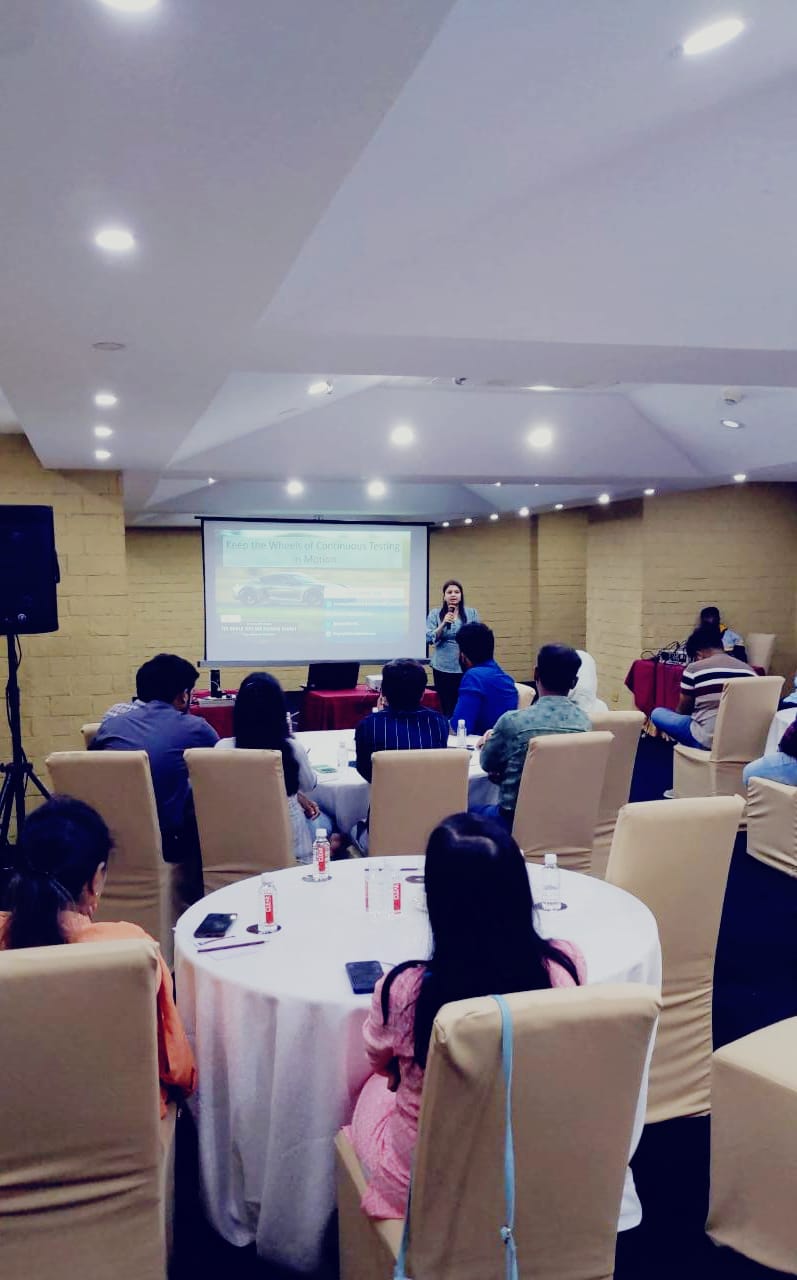
My experience speaking at World Test Engineering Summit (in-person, Bangalore)

It has been a while since I have made it to an in-person event. So, this one was extra special.

Though, a very busy week (or perhaps month 😛 ) left little time to prepare for my talk, I was excited for the day and to present in person, network and meet people at the conference. And the day matched my expectations!

It was really fun presenting to such an engaged crowd and I was amazed at the response and feedback I received during and after the session! There were some great discussions, very keen participants sharing their own stories & experiences and many fantastic comments by the delegates.

My Topic was – “Keep the Wheels of Continuous Testing in Motion”

Here are the details of the event and my session

The event was also a great platform to meet people and teams from esteemed organisations. I spent time chatting with very talented people and made some great connections.

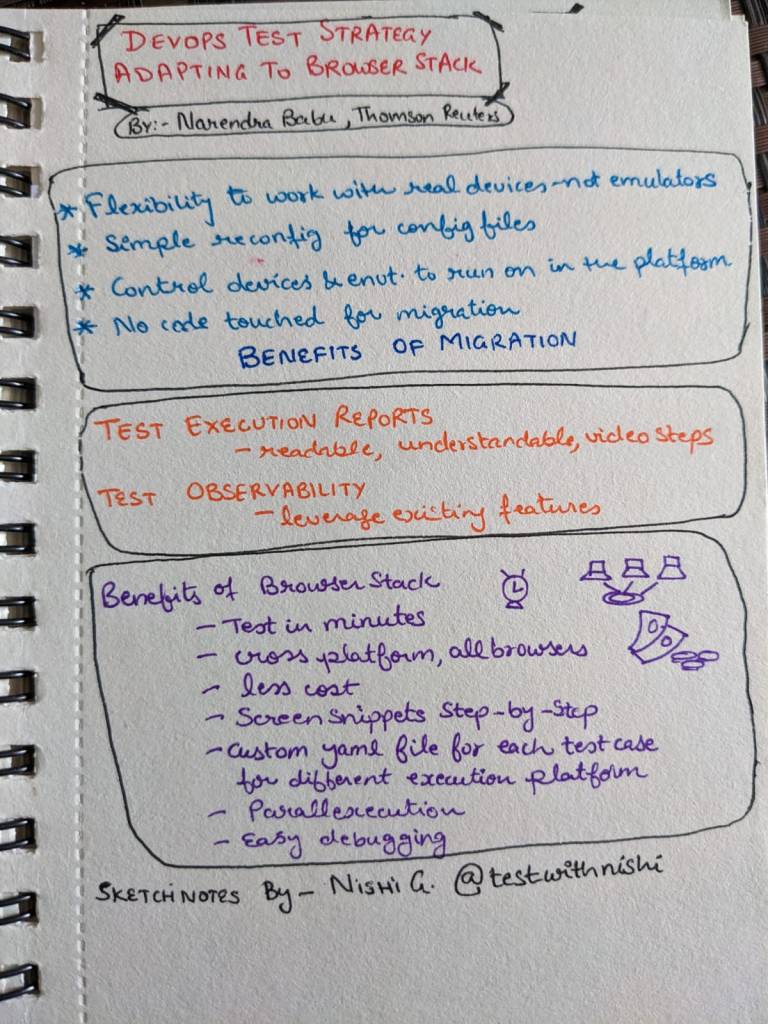
I also took this opportunity to dust off my Sketch notes pad 🙂 I made sketchnotes for some interesting sessions of the day.

I thank 1point21GWS team for having me as a part of this esteemed speaker panel.

I am always grateful for opportunities like this and always look forward to more such days!

Happy Testing!

Nishi

Why Customer Experience Directs the Software Testing Strategy?

<This is a guest post by Nishil Patel>

Digital development and customer experience run parallel with each other. Thus, businesses
across the world majorly focus on customer satisfaction as it is the only key to success. The
way businesses are operating has changed drastically in the past few years. However, it is
the one thing that will not change is the customer impact.
It means if your product or service doesn’t appeal to your audience, then you must focus on
improving them. There is no doubt that marketing will help you to some extent, but you will
not go too far. Significantly when it comes to software testing, customer experience is still a
priority. It is the base of the testing strategy that guides the testers and developers to
make it the best.

Customer-Centric Testing Approach

The customer-centric testing approach revolves around prioritizing the user experience over
rigid specifications and aims to automate exploratory testing to enhance speed and
scalability. In this approach, the main focus is on understanding and meeting the needs and
expectations of the customers.

This customer-centric testing approach goes beyond traditional testing methods that solely
rely on predefined test cases and requirements. Instead, it embraces a more adaptive and
dynamic approach that allows for continuous feedback and improvement.

By continuously monitoring and analyzing the user experience, testing teams can proactively identify areas of improvement and make data-driven decisions to enhance the overall user satisfaction.
By leveraging machine learning and AI, organizations can scale their testing efforts while
ensuring a high degree of accuracy and efficiency. The intelligent algorithms can process
vast amounts of data and provide actionable insights, enabling testing teams to optimize
their testing strategies and prioritize their efforts based on the most critical areas affecting
the user experience.

Key Aspects of Customer Experience

Customer experience plays a vital role in strategizing software testing. To understand how,
let’s have a look at the following points.

1- Trends in social media

Businesses nowadays should be transparent for an effective communication flow with the
customers. A wide range of social media such as Twitter, Facebook, etc. provides you with
direct feedback. Furthermore, you can easily expand your target audience and improve
customer loyalty.

2- Human approach

Every growing business focuses on improving customer behavior. It also helps in
understanding the current and upcoming demands. Gathering information such as
requirements, customer behavior, cultural behavior, etc. prompts innovation to bring new
ideas.

3- Regular improvements

Just gathering feedback from the customers will do nothing. As an organization, you must
respond to them. The task of creating a positive impact becomes easy when you start
solving the doubts and problems. This feedback will lead the testing and development team
to know where they lack and rectify the issues smoothly.

Read More »

I am speaking at ‘The World Test Engineering Summit’, Bangalore

I am glad to announce that I will be speaking at the 7th World Test Engineering Summit happening in Bangalore this month! And, this will be my first in-person conference since 2020, so I am even more excited for it!

The event will deliver in-depth content targeted at architects, developers, testers, integrators and managers by offering lectures and technical session to share expertise on the latest technologies, trends, tips and techniques. It is a great opportunity to present, learn, and challenge modern testing technologies and strategies!

This conference is split into two days with the first day being focused on Quality Assurance, Microservices and Serverless while Day 2 will focus on Agile Testing, Test Automation and Technology.

Here are the details of the conference and the schedule.

Check out the topic of my talk and the details on 23rd June.

Topic : Keep the Wheels of Continuous Testing in Motion

Description : Continuous testing is the way toward continuous delivery. Software teams must strive for continuous improvement of their continuous testing strategy. The key there is to embrace the continuity.The constant pressure of ‘speed to market’ needs testing to evolve and adapt. The factors that can help to keep the wheel of continuous testing in motion are both external and internal. Testers look outwards for priorities, collaboration and transparency; while they look inwards to reimagine processes, templatize lightweight documentation and recreate their own way of life in the testing world! Let us discuss ways we can plan, strategise and conduct software testing that befits continuous software delivery.

ERP Trends for the Future

<This is a guest post by Scarlett Hunter>

What is ERP

ERP (Enterprise Resource Planning) is a software that provides a suite of applications to manage the core processes of a business. These processes include finance and accounting, human resources, supply chain, procurement, manufacturing, and customer relationship management. ERP systems are designed to automate and integrate core business processes, providing all information at a single source for easy decision-making.

ERP systems come in different types, and they can be classified based on an organization’s needs, budget, and preferences.

Types of ERP Systems

On-Premise ERPThis type of ERP system is installed on the organization’s in-house servers and hardware. It is maintained and handled by the organization’s IT department. Although it provides greater control over the system, the cost of implementation, hardware, and maintenance is usually high.
Cloud-Based ERPThe software is hosted on a cloud server, and organizations access it via the Internet. They only pay for the software features and modules they need, and the providers generally take care of the hosting, maintenance, and updates. Cloud-based ERP is more affordable than on-premise ERP and is gaining popularity due to the low initial investment and the ability to access data in real-time, from anywhere in the world.
Hybrid ERPThis type of ERP system is a mix of on-premise and cloud-based ERP. The organization can use on-premise implementation to handle sensitive data within the organization, while it puts less sensitive modules on the cloud.
Open-source ERPAn open-source ERP system is a software that is available for anyone to use, customize and distribute. In Open-source ERP, an organization can modify the code to suit its specific business needs. It’s free and provides greater flexibility, but the downside is that the organization must be equipped with IT expertise to handle the system.

Future Trends of ERP

1. AI and Machine Learning

Artificial Intelligence (AI) and Machine Learning (ML) are revolutionizing ERP systems by enabling predictive analytics, machine-to-machine communication, and automated decision-making.

AI and ML algorithms can analyze large datasets and provide insights into areas such as demand forecasting, supply chain optimization, and predictive maintenance.

By automating routine tasks and decision-making processes, businesses can reduce costs, improve accuracy, and free up their employees to focus on more strategic tasks.

2.  Integration with IoT

ERP systems are also integrating with the Internet of Things (IoT) to create smarter supply chains and manufacturing processes.

IoT devices such as sensors, beacons, and RFID tags can collect data in real time, enabling businesses to track inventory levels, monitor production processes, and optimize delivery routes.

By integrating ERP with IoT, businesses can create a truly connected and intelligent supply chain that can predict and respond to changing market conditions.

3. Cloud Deployment

With cloud computing gaining momentum, businesses are shifting towards cloud-based ERP solutions to reduce infrastructure costs, improve scalability, and facilitate remote accessibility.

Cloud deployment allows businesses to access ERP systems from anywhere and at any time, enabling employees to work remotely and collaborate more effectively.

It also provides better security measures than on-premise solutions since data is stored on cloud servers and is protected by multiple layers of security protocols.

4. Mobility

With the increasing use of smartphones and tablets, employees are no longer tied to their desks and can use their mobile devices to access ERP systems.

Mobile ERP solutions offer real-time access to data, allowing employees to stay informed of critical business processes such as inventory, sales, production, and delivery status.

Mobile ERP solutions also provide push notifications and alerts, enabling employees to take immediate action on any issues or opportunities.

5. Customization

Customers are increasingly demanding personalized experiences, and businesses are responding by customizing their products and services to meet these demands.

ERP systems are also becoming more customizable, allowing businesses to tailor their solutions to their specific needs. Customization can include adding new modules, integrating with third-party applications, and configuring workflows to suit specific business processes.

Customization enables businesses to differentiate themselves from their competitors and provide unique value to their customers.

Conclusion

From the above discussion, it is clear that there are multiple trends that are coming onto the surface such as cloud deployment, mobility, AI and ML, integration with IoT, and customization are all major trends that are shaping the future of ERP systems. By adopting these trends, businesses can gain a competitive edge, optimize their operations, and provide exceptional customer experiences.

<This is a guest post

Author- Scarlett Hunter | Python Developer | Contact: scarletthunter202@gmail.com >

Speaking at WomenTech Global Conference 2023

I was invited to speak at the WomenTech NetworkGlobal Conference #WTGC2023 which was a mega event held from 9th to 12th May 2023.

About the Event

It was a virtual event which is the largest women in tech conference featuring +800 speakers over 4 days with parallel tracks and avenues for networking, online expo and job fairs.
WomenTech is an awesome platform which unites a global community of more than 100 000 women in tech, minorities and allies from 183 countries!!

My Session

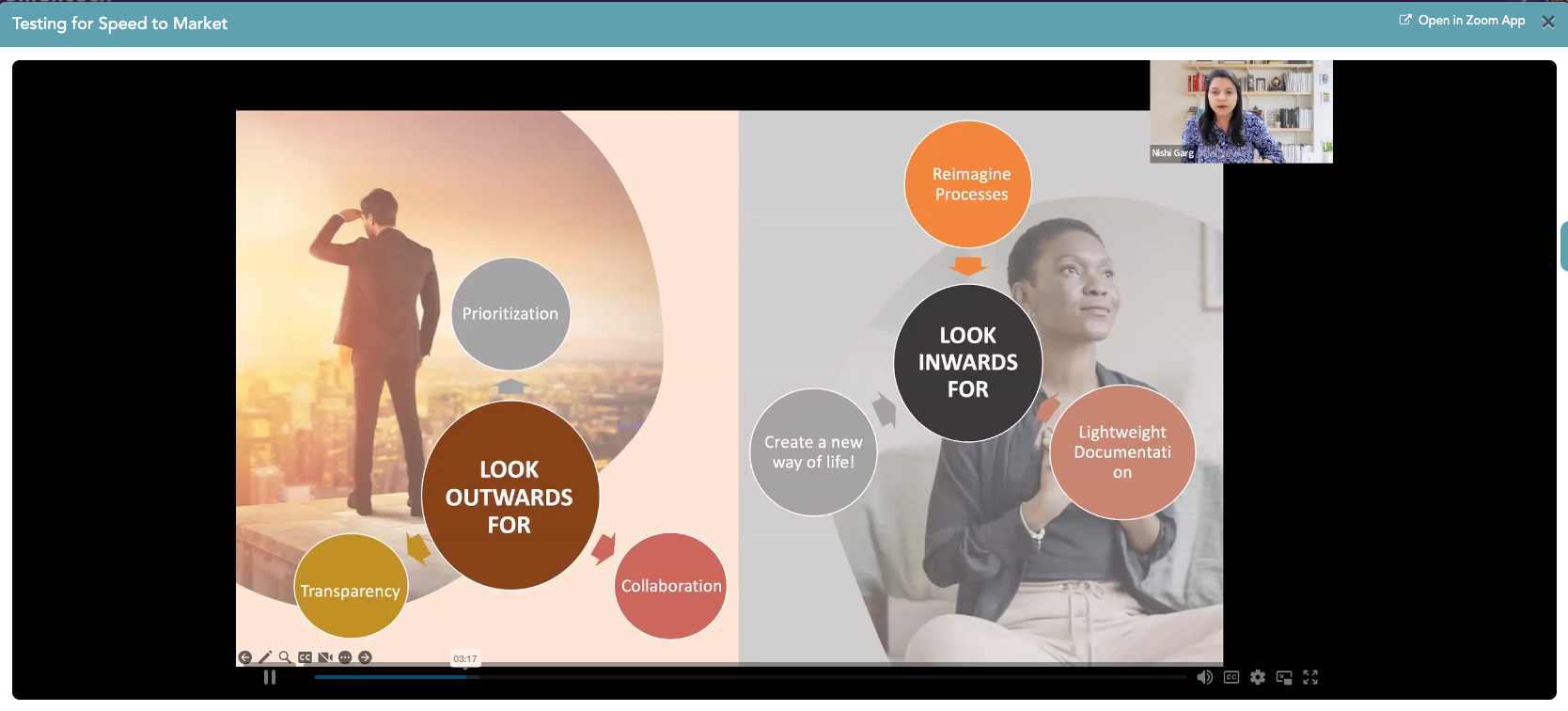
In my talk “Testing for Speed to Market” – I talked about the key aspects we bring in from outside the team as well as factors we can look at with a bit of soul searching within our team, processes and ideologies to fit the need of constant, consistent and fast software delivery.

Here is a snippet from my talk and a few snapshots:

Attending the Event

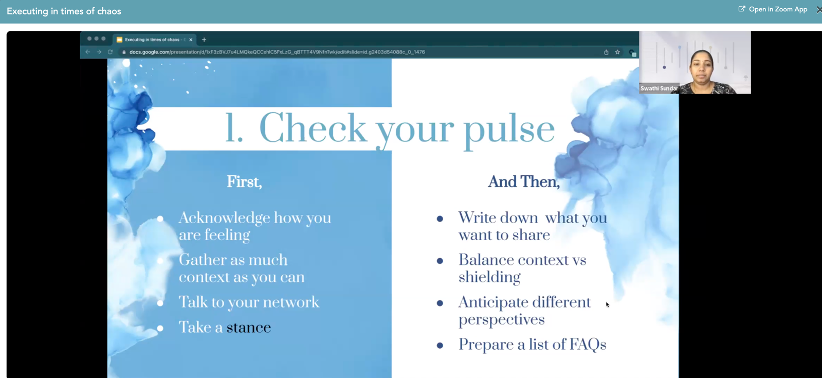
I also attended the event on all 4 days to hear some very insightful talks by some amazing speakers!

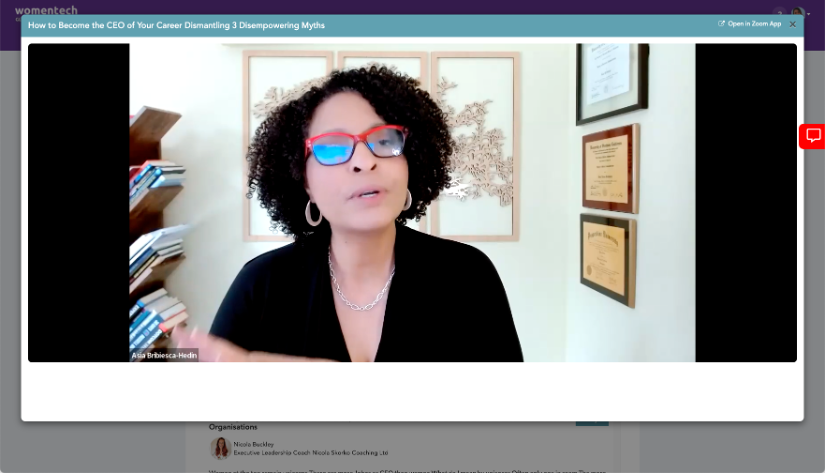
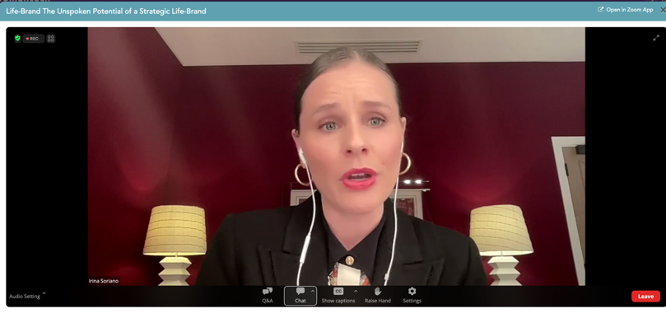
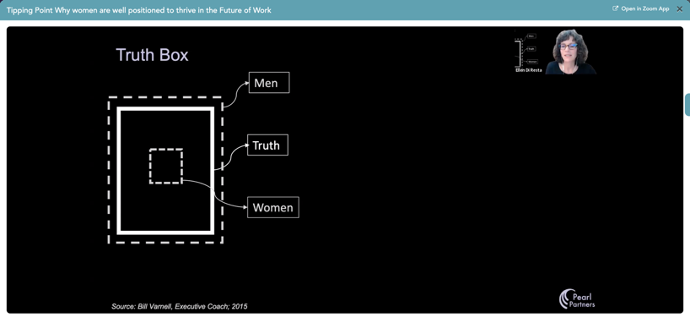
Here are snippets of some of the sessions I attended:-

I am incredibly grateful for this opportunity to be a part of the speaker lineup of such a prestigious event and in awe of all these amazing women who are taking such leaps of advancement in their career, personal and professional growth!

Looking forward to more such events from the WomenTech community!

Cheers

Nishi

Breaking Boundaries: Women at the Forefront of STEM

<This is a guest post by Lena Heller>

Men have traditionally held the majority of positions in STEM (Science, Technology, Engineering, and Mathematics). But over time, women have been pushing boundaries and achieving important advancements in the industry. In numerous STEM disciplines, including medical, engineering, and computer science, women are now making ground-breaking advances. These female role models are paving the way and demonstrating that gender should never be a hindrance to seeking a profession in STEM. Some of the ladies who are leading the way in STEM are highlighted and celebrated in this article.

Medicine
Dr. Jane C. Wright blazed new paths in the medical industry. Dr. Wright, who was born in 1919, was the first African American woman to complete medical school. She was also the first woman to hold the position of department director at a renowned cancer study institute. Dr. Wright was a pioneer in cancer chemotherapy, and thanks to her efforts, numerous lives have been spared by medicines. Dr. Patricia Bath is another lady who has made a major impact on medicine. The first African American woman to be granted a patent for a medicinal innovation was Dr. Bath. She invented a technique for removing cataracts with a laser, which transformed eye surgery. In the area of telemedicine, which employs technology to deliver healthcare to patients in distant locations, Dr. Bath was a pioneer.

Engineering
Another profession that has historically been controlled by males is engineering. But female pioneers in this area, like Dr. Mae Jemison, are dismantling stereotypes and establishing themselves. The first African American lady to hold the position of astronaut was Dr. Jemison. She is an architect and a doctor as well. Many young women have been motivated to seek STEM professions by Dr. Jemison’s ground-breaking accomplishments. Dr. Ayanna Howard is another lady who has distinguished herself in engineering.

Roboticist Dr. Howard has contributed to numerous NASA projects. She teaches automation at the Georgia Institute of Technology as well. The goal of Dr. Howard’s study is to create robots that can communicate with people more naturally. Her work has the ability to completely change how we deal with robots on a regular basis.

Computing Science
Another field where women are making substantial progress is computer science. Computer science was pioneered by Dr. Grace Hopper. She created the first translator, a software that converts computer code into commands that are understandable by machines. Modern computer languages are a direct result of Dr. Hopper’s efforts. Additionally, she was the first female recipient of the National Medal of Technology. Dr. Fei-Fei Li is another lady who has made a major impact on computer science.

Dr. Li is an expert in artificial intelligence and a computer physicist. (AI). She has worked on numerous AI initiatives, including the creation of ImageNet, a collection of millions of labeled pictures that has been used to train AI models. She is the co-director of the Stanford Institute for Human-Centered AI. The work of Dr. Li has the ability to change a number of sectors, including healthcare and transit.


Obstacles for women in STEM
Even though women have made great strides in STEM fields, they still encounter numerous obstacles. The lack of participation is one of the greatest issues. Young girls who are interested in a future in STEM may be discouraged by the fact that women are still overwhelmingly lacking in these disciplines. Women only make up 28% of the STEM field, according to a National Science Foundation study. The gender wage disparity is one more issue that women deal with. Even when they have the same credentials and expertise, women in STEM areas frequently receive lower pay than their male peers. This can hinder women’s professional advancement and serve as a dissuader for women who are thinking about a future in STEM.

The absence of mentoring and assistance is another problem that women in STEM must deal with. Many women claim to feel alone in their jobs and to have no access to mentors who can help them negotiate the difficulties of their profession. As a result, women may find it challenging to progress in their jobs and may have fewer chances for development and advancement. Finally, prejudice and discrimination against women in STEM fields is a problem. Being regarded seriously in the workplace can be challenging for women because they are frequently the target of assumptions and biases. Women tech jobs frequently face particular difficulties like discrimination on the basis of their gender, color, or nationality.

Getting past the obstacles
Despite the difficulties that women in STEM experience, there are methods to get around them and foster a more welcoming and encouraging atmosphere for them. Increasing chances for mentoring and assistance is one strategy. Women are more likely to thrive in their jobs and feel more encouraged at work if they have access to mentors and sponsors. More networking and collaboration possibilities are one more method to encourage variety and equality in STEM. We can help to create a community of support and inspiration for women in STEM disciplines by putting them in touch with one another.

This can serve to lower barriers and advance diversity in the industry.

Promoting knowledge and instruction about the value of variety and inclusion in STEM fields is also crucial. We can inspire more people to move and work toward fostering a more inclusive and supportive atmosphere for all by bringing attention to the problems that women experience in the workplace.

Conclusion
In conclusion, women have made important advancements to STEM disciplines, but they still struggle with issues like bias, mentoring, and inclusion. To build a more equitable and creative future, it is crucial to address these issues and promote variety and equality in STEM disciplines.

How to Start a Career in Software Testing

<This is a guest post by Kuldeep Rana>

Starting a career in software testing can be rewarding for individuals interested in technology and quality assurance. There are opportunities for growth, including specializing in a particular area, such as automation testing or performance testing, or moving into management positions.

If you are interested in technology and enjoy problem-solving, a career in software testing may
be the right fit for you. Certainly! Here is some advice on how to start a career in software testing:

Introduction to Software Testing

Software testing is a critical part of software development, ensuring that software applications work as intended and meet user requirements. Software testing is a process of evaluating and verifying a software application or system to check whether it meets the specified requirements and performs as expected. The main goal of software testing is to identify defects or bugs in the software and ensure that the software is functional, reliable, and meets user expectations.
There are different types of software testing, and the approach used depends on the specific requirements and goals of the project.

Different Roles of a Software Tester

a. Functional Testing: Functional testing is a type of software testing that verifies whether the software application’s functionality works as intended and meets the specified requirements. It checks the software’s functionality against the requirements and specifications. It verifies that the software performs as expected in different scenarios.

Testing software functionality includes focusing on testing techniques, exploratory and adhoc testing and requires testers to also acquire domain knowledge for their sofwtare.

b. Non-Functional Testing: Non-functional testing is a type of software testing that evaluates the software application’s non-functional aspects, such as performance, reliability, scalability, usability, security, and compatibility. Non-functional testing evaluates how well the software meets non-functional requirements, such as speed, responsiveness, and user experience.

c. Test Automation: This includes focusing on automating aspects of test execution, test data creation and reporting that can help in saving time and improves efficiency by automating repetitive tasks. A test automation expert has knowledge of automation concepts, specialises in tools and CI/CD aspects of testing phases and resources.

Tips to help you start a career in software testing

Gain a powerful foundation in software testing concepts

To become a successful software tester, you need a solid understanding of software testing concepts, such as testing types, methods, and tools. You can begin by reading books on software testing or taking online courses to build your knowledge. Some popular books on software testing include “Software Testing: A Craftsman’s Approach” by Paul C. Jorgensen, “How to Break Software: A Practical Guide to Testing” by James A. Whittaker, “Software Testing Techniques” by Boris Beizer, “The Art of Software Testing” by Glenford J. Myers, and “Testing Computer Software” by Cem Kaner, Jack Falk, and Hung Q. Nguyen.

Obtain a relevant degree

While a degree is not a requirement for becoming a software tester, having a degree in computer science, engineering, or a related field can be advantageous in landing a job in software testing. A degree can demonstrate your understanding of software development and computer programming, which can be useful in testing software applications.

Build practical experience

Practical experience is critical in software testing. You can gain experience by participating in open-source projects, contributing to software development efforts, or testing applications in a volunteer or part-time capacity. This experience can also help you develop your testing skills and build a portfolio to showcase your work.

Learn automation testing tools

Automation testing tools have become an essential part of software testing, and learning them can be beneficial in your career. Popular automation testing tools include Selenium, JMeter, and Appium. Familiarizing yourself with these tools can help you become more efficient in testing software applications and make you a more valuable candidate in the job market.

Seek certification

Consider obtaining a certification such as ISTQB (International Software Testing Qualifications Board) or CSTE (Certified Software Tester). Certification can help validate your skills and experience to potential employers and demonstrate your commitment to the profession. Certification can also provide you with a competitive advantage when applying for software testing jobs.

Network with other software testers

Networking is essential in any profession, including software testing. Attend software testing conferences, join online communities, or participate in forums to connect with other software testers. Networking can help you learn about job opportunities, share knowledge, and gain insights from industry experts.

Apply for entry-level jobs

Look for entry-level software testing jobs such as software tester, quality assurance analyst, or test engineer. These roles can provide you with on-the-job training and help you gain experience in real-world testing scenarios. Entry-level jobs can also help you build your skills, gain exposure to various testing tools and methodologies, and advance your career. Refer to manual testing interview questions for ideas and prepare for entry-level jobs.

Conclusion

In conclusion, starting a career in software testing requires persistence, continuous learning, and a strong desire to learn and grow. The software testing career path can be rewarding and challenging. As technology evolves, so too does the role of software testing. By building your skills and experience, obtaining certifications, and networking with other software testers, you can position yourself for a successful career in software testing.

It is important to continually learn and stay up-to-date with new testing methodologies, tools, and technologies. Additionally, developing strong communication and collaboration skills will help you work effectively with developers, project managers, and other stakeholders.

*****************************************************************************************************

<Image Credits- unsplash.com>

<This is a guest post by Kuldeep Rana who is the founder and lead author of ArtOfTesting. He is skilled in test automation, performance testing, big data, and CI-CD. He brings his decade of experience to his current role where he is dedicated to educating the QA professionals.>


Finding Confidence and Mentoring: Speaking Skills for Women in Tech

<This is a guest post by Lena Heller>

Women today have made significant progress in the technology sector by removing barriers and dispelling preconceptions. Nevertheless, despite advancements, women in technology continue to confront particular difficulties when it comes to speaking and presenting. This piece will examine these difficulties and provide guidance on how women in technology may receive more recognition by honing their presentation skills, gaining confidence, and finding mentoring.

Mentoring

A major issue is the dearth of mentoring for women in technology. Women are 24% less likely than males to have a sponsor, and they are also less likely to get guidance from top executives, according to data from LeanIn.org. When it comes to developing their public speaking and presenting abilities, women in technology may find this lack of mentoring to be particularly challenging.

It may be quite beneficial to have a mentor who can offer advice and criticism on presentational techniques. A mentor may offer guidance on how to develop, give suggestions on how to attract an audience, and offer calming techniques. A mentor can also aid in boosting confidence by providing assistance and inspiration.

Community

The value of community is one viewpoint to take into account. Women in technology may create encouraging networks that assist them as they develop their public speaking and presenting abilities.

Joining organizations like Women Who Code, Women in Tech, or Tech Ladies can open doors for networking with other women working in the field, sharing experiences, and exchanging knowledge.

Opportunity

Women m technology might have felt a dearth of opportunities and inclusion in conference lineups and speakers lists. As that improves and events become more and more aware of the need to be inclusive of voices of different genders, races and nationalities, more avenues are opening up to present yourself in the best way possible and bring your voice to the forefront!

Self Confidence

When it comes to speaking and presenting, lack of confidence may be a significant obstacle for women in technology. Women may experience feelings of exclusion or a lack of value for their opinions, which can cause self-doubt and a fear of speaking up. Gaining confidence is essential to getting beyond these obstacles.

Honing Your Skills

There are many ways to hone your speaking and presenting skills as a woman in tech. Here are a few tips useful for anyone looking at speaking or presenting at an event:

Preparation

Preparation is imperative increase confidence. Clarity on the subject matter and target audience may ease nervousness and boost self-assurance. Multiple rehearsals of the presentation might help you find areas that could use improvement and increase your confidence in how to deliver the material.

The viewpoint of the audience should also be taken into account. It’s possible that listeners for presentations by women in tech aren’t used to seeing women in technical jobs. This may result in unintentional biases that affect how the audience sees the presenter.

Practice

Speaking in low-pressure situations is one method to gain confidence. For instance, joining a local Toastmasters club may offer a secure setting to hone public speaking abilities and get feedback in an encouraging setting. Finding chances to speak in front of small groups, such as facilitating team meetings or giving a presentation at a meetup, may also assist with confidence and skill development.

Body Language

The significance of body language should also be taken into account when talking about speaking and presentation abilities for women in technology. The audience’s perception of the presenter and the message being conveyed can be greatly influenced by nonverbal clues. Women could use nonverbal cues like crossing their arms or avoiding eye contact that could be interpreted as meek or deferential, which might take away from their message.

Concentrate on using forceful and confident body language to get over these obstacles.

Stand tall, Make eye contact, and Make open motions.

Power postures, like the “Wonder Woman” with the feet shoulder-width apart and the hands on the hips, may also assist build confidence and exude authority.

Voice Modulation

The verbal delivery should also be considered. According to research, women’s voices are frequently assessed more severely than men’s, and they may face consequences if they speak up or use vocal fry. However, altering one’s voice patterns can be difficult, and women shouldn’t feel under pressure to adhere to societal expectations of speaking.

For instance, studies have shown that women frequently say things like “I think” or “maybe,” which might damage their credibility and authority.

To be heard loudly and confidently, practice projecting your voice.

Concentrate on utilizing your voice to exude excitement and love for their profession.

Speaking at a steady speed and utilizing different tones and inflections to emphasize points are some examples of how to do this.

Establish Credibility

When selecting a topic to speak, concentrate on establishing credibility via your competence and knowledge in that area.

Building trust and overcoming prejudices can be facilitated by meticulous planning and showing a solid mastery of the subject.

Women can also use their distinctive perspectives to contribute fresh viewpoints and methods.

Storytelling

Utilize narrative to enhance the impact of your presentations.

The use of stories may help make complex technical ideas more relevant, vivid, and emotionally engaging for the audience.

Conclusion

In conclusion, women in IT suffer particular difficulties when it comes to confidence, prejudice, and speaking and presenting skills. By concentrating on gaining confidence, utilizing distinctive perspectives, effectively using storytelling and body language, and finding allies and advocates, women can overcome these obstacles and succeed in public speaking. The industry can gain from the variety of viewpoints and knowledge that women in tech bring to the table by promoting and supporting them.

Finally, it’s critical to understand that speaking and presenting abilities are skills that may be improved in time with practice, support and mentorship. Early failures shouldn’t deter you! Concentrate on constant development and you will get there!

Good luck!

<Image Credits – Unsplash.com>

This is a guest post by Lena Heller – Reach her at lenaaaheller@gmail.com

I am speaking at WomenTech Global Conference 2023

I am super excited to announce that I will be speaking at my Second WomenTech NetworkGlobal Conference – The last one was in 2021 and now in May this year!
I am grateful for this amazing opportunity and looking forward to the grand event!

Here are the details of my session:

Session: Testing for Speed to Market

The software world is constantly under pressure of ‘speed to market’, which impacts each stage of software development. Software testing is not left untouched by this constant hustle and hence has every reason to evolve and adapt! Testers look outwards for priorities, collaboration and transparency; while they look inwards to reimagine processes, templatise lightweight documentation and recreate their own way of life in the testing world! Let us discuss ways we can plan, strategise and conduct software testing that befits this fast pace of software delivery and upholds the quality standards the market demands.

Key Takeaways

  • Testing under pressure of ‘speed to market’
  • Adapting software test planning and strategy to the fast pace of software delivery
  • Relooking at test prioritization
  • Optimizing test processes and creating lightweight documentation
  • The role of cross-functional communication & collaboration in agile software delivery

Register for the event here

See you there,

Cheers!