I am speaking at DevOpsCon Singapore 2023

I am super excited to announce that I will be a part of the esteemed lineup of speakers at this mega event DevOpsCon Singapore this year! DevOpsCon is a much coveted event in the industry and I am thrilled about this incredible opportunity.

This conference is not just about technology; it’s a meeting of minds, an exchange of ideas, and an opportunity to connect with the leaders and innovators in the DevOps community. I’m honored to be a part of this event and to contribute to the dialogue surrounding the future of our industry.
I will speak on Testing in the fast paced software delivery climate and some changes in mindset as well as culture required to achieve the smooth flow of continuous delivery.

It feels great to be a part of such an amazing speaker lineup, consisting of some great speakers from around the globe!

📆 Event Details

📍 DevOpsCon Singapore

🗓️ 11-14th Dec 2023

🔗 Check out the Program: [https://devopscon.io/singapore/program-singapore/]

What am I speaking about?

In the dynamic realm of software development, the race to market is ever-present, leaving no stage untouched, including software testing. Testers find themselves seeking priorities, collaboration, and transparency from external sources while reimagining processes, streamlining lightweight documentation, and carving their unique path in the testing world. Let’s come together to explore how we can plan, strategize, and conduct software testing that aligns with the fast pace of software delivery while upholding the quality standards demanded by the market.

In this invigorating talk, I will discuss ways to optimize software testing to match the rapid tempo of software delivery. By identifying antipatterns to avoid and key priorities in terms of processes, communication, collaboration, and automation, we will navigate the challenges of testing under the pressure of speed to market. Expect to discover strategies for adapting software test planning and strategy, reevaluating test prioritization, optimizing test processes, and creating lightweight documentation. Additionally, we’ll emphasize the crucial role of cross-functional communication and collaboration in Agile software delivery.

Here are the details of my talk on the Conference Website:

https://devopscon.io/continuous-delivery-automation/testing-for-speed-to-market/

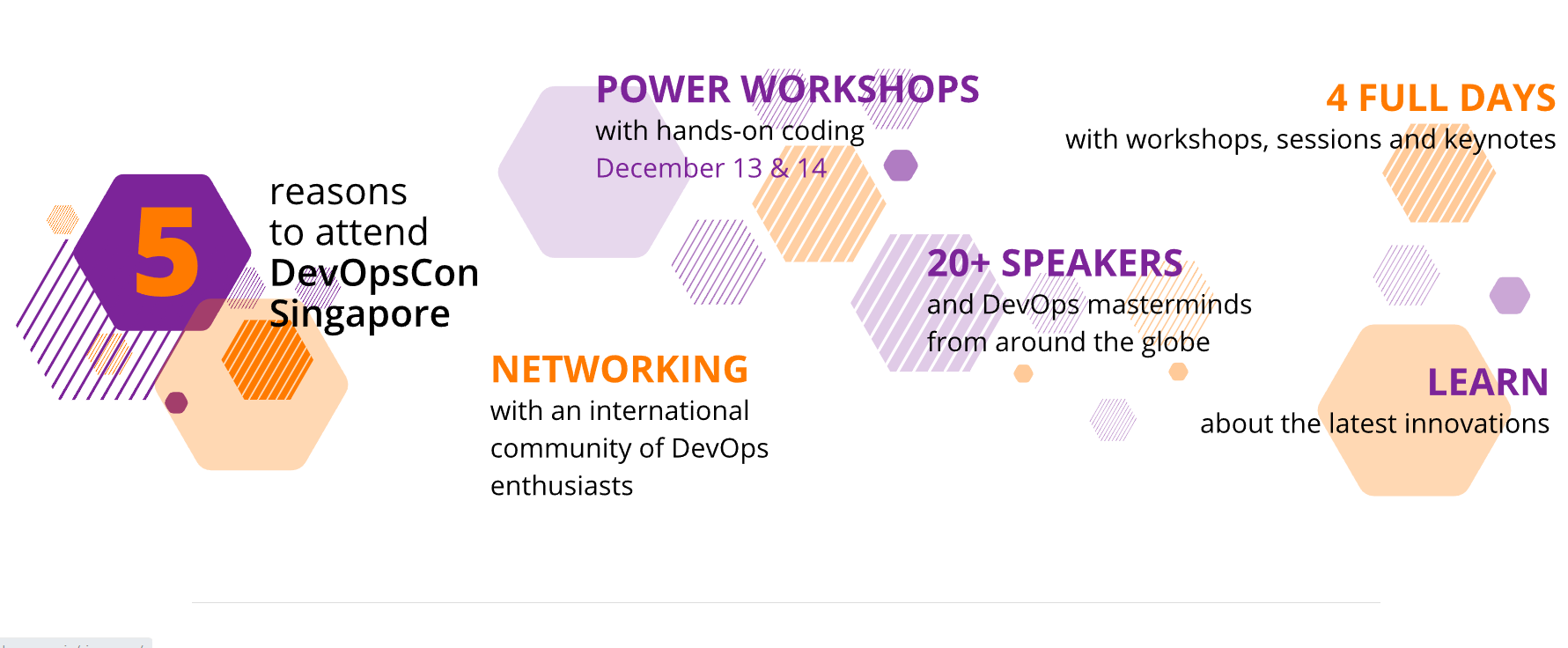
This event is going be action-packed with 4 full days of sessions, workshops, networking and so much more! Check out the details on the website!
See ya there!

Cheers,

Nishi

A Typical Day of a Tester in an Agile Pod : Guest Blog

I am glad to share that a guest post I wrote for The Test Tribe website has now been published.

I was approached by the team to contribute to their valuable and rich content library where they publish articles, how to’s, insights on testing topics, case studies and upskilling posts for their vast testing community.

I wrote about the life of a tester in an Agile Pod and how it might be different from a traditional tester. We follow a typical day of Ted, our protagonist who is a tester in an agile pod team. We see how he spends his day working with his developers, product owner and other stakeholders along with balancing his duties as a pod leader. Read the article here to follow along on his exciting journey–>

I am happy to be associated with The Test Tribe community and the great work they are doing!

Grateful for this opportunity and always looking ahead for more! 🙂

Cheers

Nishi

I am speaking at TestFlix!

I am speaking at TestFlix, 2023 – World’s Biggest Virtual Software Testing Conference with 50+ other global speakers, 15+ themes and 8,000 + Global registrations!

The event is slated to take place virtually on 23 and 24 September 2023, which will be 2 days filled with learning, fun, and meeting new people worldwide!

Register now to hear me talk at TestFlix.

My Talk is titled “Keep The Wheels of Continuous Testing in Motion”

The event is Free to attend. Register now at bit.ly/testflix

Tips and Tricks to Master API Testing in Postman

Modern software development relies on successful software testing services sessions. Postman is currently the best tool for challenging requests. It accomplishes your work involving primary APIs in diverse environments. A well-versed developer can undertake test automation and scripts with monitors. Organised and scheduled tests with team collaboration also can be conducted. They are critical for the efficiency, reliability, and overall effectiveness of this practical tool.

In the context of the increasingly interconnected global landscape, APIs have emerged as a crucial component in contemporary software growth practices. Consequently, API test has emerged as an essential element within the software development life cycle. Postman is widely recognized as a prominent means for API testing, owing to its considerable popularity and apparent advantages. This robust tool empowers developers to efficiently develop, and verify the (APIs). 

By offering a straightforward interface as well as a comprehensive set of functionality, Postman makes it possible for developers and API testers to streamline the procedure of testing (APIs). It does not matter whether you have years of experience as a software engineer or are just starting in the field of API testing; it is necessary to have a basic grasp of Postman to make full use of its capabilities.

In this article, we will thoroughly examine the software tool known as Postman and delve into various strategies and techniques which could successfully harness its extensive capabilities.

Ahead we will augment your skill sets as an experienced developer. If you are new and learning to adapt, it will encourage you to explore a wide variety of features of this tool. Eventually, it will not just be the proverbial ‘Postman’ exchanging and delivering requests. It will become the ideal go-to API testing solution as you become a Postman guru. 

Disclaimer:
We presume you have already installed Postman, the amazing tool for Application Programming Interface aka API testing. The following blog will only focus on the tool’s credibility for skilled developers. Using various features you can share requests, and create and test documents/files. The tool accepts requests to save complexities related to HTTP and read responses coming from the client-server.

POSTMAN Syntax

GET retrieves data from an API.

POST sends new data to an API.

PATCH and PUT update existing data.

DELETE removes existing data.

5 tips that make Postman beneficial 

  1. Collating all tests with collections.
  2. Managing test data under different environments.
  3. Automation with scripts. Use the API login token for all requests.
  4. Monitors for scheduled test runs. 
  5. Sharing results with the team and taking quick decisions on requests.  
Read More »

Agile Testing Strategies for Successful Software Development

Agile software development has become the modern gold standard in programming and tech innovation. Known for its dynamic and flexible methodology, Agile is rooted in customer satisfaction, consistent delivery, teamwork, and the capacity to adapt to changes.

However, central to the Agile methodology is a component that often goes unappreciated – testing.

No matter how elegant or efficient the code is, thorough testing is necessary for it to succeed. This post will dive into the critical role of testing within Agile, demonstrating how it aligns with programming & source control best practices, such as using Git, implementing effective web development strategies, and leveraging Azure. By exploring various testing strategies, we aim to shine a light on enhancing your software development process for success.

Understanding Agile Testing

Agile testing is a critical part of the Agile methodology. Unlike traditional testing methods, it is integrated into every stage of development rather than being a separate phase. This approach ensures that issues are identified and resolved quickly, facilitating a smoother development process.

The key principles of Agile testing include:

  1. Continuous Testing: Test early; test often. Agile testing happens continuously throughout the development process.
  2. Team Involvement: Everyone on the Agile team participates in testing, not just designated testers.
  3. Feedback and Improvement: Agile testing thrives on feedback, adapting, and improving as the project progresses.

Unlike traditional testing methods that usually occur after coding is complete, Agile testing runs concurrently with development. This continuous, intertwined process allows for rapid adjustments, reduces bug accumulation, and ensures that the final product aligns more closely with user needs. Agile testing’s essence is flexibility, frequent communication, and adaptability, instrumental to successful software development.

Agile Testing Strategies

Navigating the dynamic waters of Agile software development requires robust, adaptable testing strategies. These methods facilitate quality assurance, swift error detection, and effective communication, all while keeping the user’s needs at the forefront.

Read More »

What is Smoke Testing: A Complete Guide

While the software development process is going on. It is necessary to test various functions of the software repeatedly. Repeated testing ensures that the software is working in an intended manner and bugs (if present) are eliminated.

Many software development companies use smoke testing to find if the project is ready for end users’ use or if are there any more necessary changes in the software.

When in-depth testing is done, the chances of solving even the smallest bugs increase. In this article, we will understand what smoke testing is, along with its benefits, risks, and when to use this technique. So, let’s dive into this together.

What is Smoke Testing?

Smoke test, aka, confidence testing, is a process to know the functionality, stability, integration ability, and efficiency of the project under development.

One can also call this process verification testing as the test checkers for errors with the software build. This technique generally involves multiple tests that testers can conduct manually or use automated test methods.

Testing different software components can enable the testers to discover breaches in the code issues without using more valuable assets. Smoke testing also helps the QA team to determine whether the software is ready to release or might require additional development and testing work.

Why is Smoke testing required?

Smoke testing is a process that is performed in the phase of software when it is released to the QA and testing team. Consider a situation where an eCommerce app is deployed in the testing phase, but when the tests are going on, it is found the user is not allowed to log into the app to proceed and perform different tasks; or one can say- the user is blocked from using the app because he/she is not able to perform basic login activities.

Then there is no meaning in performing detailed and exhaustive testing of other major modules of the app. First, the development team has to solve the issue where users cannot log in to the app. Such issues are determined and solved first while performing smoke testing.

Here are some prime reasons why smoke testing is used while developing software or an app:

  • Smoke testing finds major issues in the app in the beginning only
  • It helps in reducing the efforts and time of the QA team that could be wasted if the project is not stable
  • With smoke testing one can make early identification of the defects
  • It increases the stability of the software or app developed

Why is this technique called ‘Smoke’ testing?

Read More »

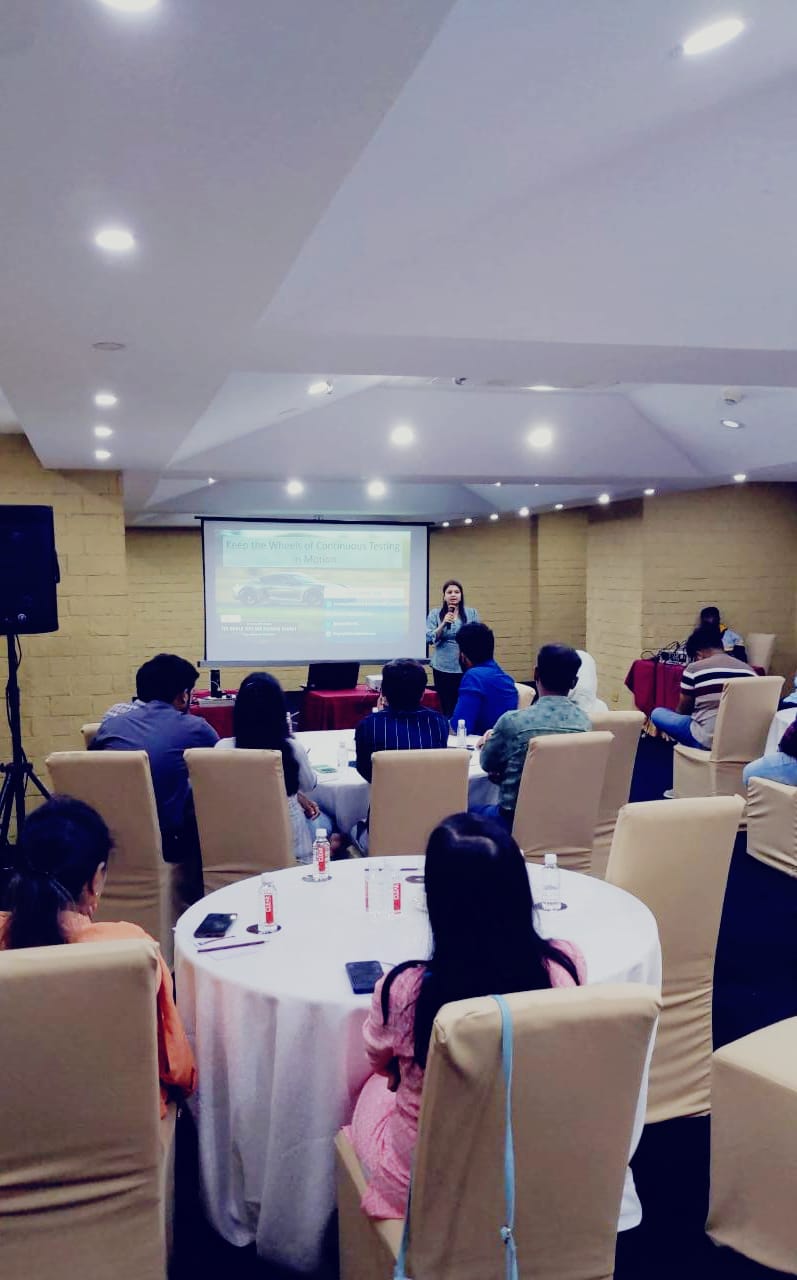
My experience speaking at World Test Engineering Summit (in-person, Bangalore)

It has been a while since I have made it to an in-person event. So, this one was extra special.

Though, a very busy week (or perhaps month 😛 ) left little time to prepare for my talk, I was excited for the day and to present in person, network and meet people at the conference. And the day matched my expectations!

It was really fun presenting to such an engaged crowd and I was amazed at the response and feedback I received during and after the session! There were some great discussions, very keen participants sharing their own stories & experiences and many fantastic comments by the delegates.

My Topic was – “Keep the Wheels of Continuous Testing in Motion”

Here are the details of the event and my session

The event was also a great platform to meet people and teams from esteemed organisations. I spent time chatting with very talented people and made some great connections.

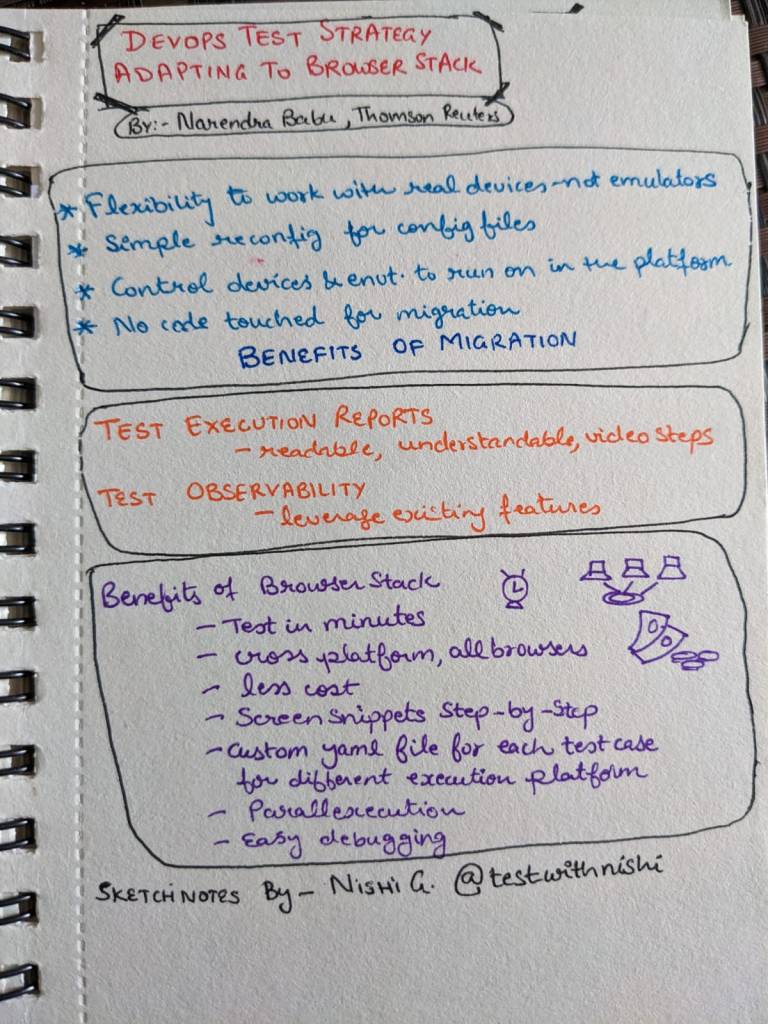
I also took this opportunity to dust off my Sketch notes pad 🙂 I made sketchnotes for some interesting sessions of the day.

I thank 1point21GWS team for having me as a part of this esteemed speaker panel.

I am always grateful for opportunities like this and always look forward to more such days!

Happy Testing!

Nishi

Why Customer Experience Directs the Software Testing Strategy?

<This is a guest post by Nishil Patel>

Digital development and customer experience run parallel with each other. Thus, businesses
across the world majorly focus on customer satisfaction as it is the only key to success. The
way businesses are operating has changed drastically in the past few years. However, it is
the one thing that will not change is the customer impact.
It means if your product or service doesn’t appeal to your audience, then you must focus on
improving them. There is no doubt that marketing will help you to some extent, but you will
not go too far. Significantly when it comes to software testing, customer experience is still a
priority. It is the base of the testing strategy that guides the testers and developers to
make it the best.

Customer-Centric Testing Approach

The customer-centric testing approach revolves around prioritizing the user experience over
rigid specifications and aims to automate exploratory testing to enhance speed and
scalability. In this approach, the main focus is on understanding and meeting the needs and
expectations of the customers.

This customer-centric testing approach goes beyond traditional testing methods that solely
rely on predefined test cases and requirements. Instead, it embraces a more adaptive and
dynamic approach that allows for continuous feedback and improvement.

By continuously monitoring and analyzing the user experience, testing teams can proactively identify areas of improvement and make data-driven decisions to enhance the overall user satisfaction.
By leveraging machine learning and AI, organizations can scale their testing efforts while
ensuring a high degree of accuracy and efficiency. The intelligent algorithms can process
vast amounts of data and provide actionable insights, enabling testing teams to optimize
their testing strategies and prioritize their efforts based on the most critical areas affecting
the user experience.

Key Aspects of Customer Experience

Customer experience plays a vital role in strategizing software testing. To understand how,
let’s have a look at the following points.

1- Trends in social media

Businesses nowadays should be transparent for an effective communication flow with the
customers. A wide range of social media such as Twitter, Facebook, etc. provides you with
direct feedback. Furthermore, you can easily expand your target audience and improve
customer loyalty.

2- Human approach

Every growing business focuses on improving customer behavior. It also helps in
understanding the current and upcoming demands. Gathering information such as
requirements, customer behavior, cultural behavior, etc. prompts innovation to bring new
ideas.

3- Regular improvements

Just gathering feedback from the customers will do nothing. As an organization, you must
respond to them. The task of creating a positive impact becomes easy when you start
solving the doubts and problems. This feedback will lead the testing and development team
to know where they lack and rectify the issues smoothly.

Read More »

I am speaking at ‘The World Test Engineering Summit’, Bangalore

I am glad to announce that I will be speaking at the 7th World Test Engineering Summit happening in Bangalore this month! And, this will be my first in-person conference since 2020, so I am even more excited for it!

The event will deliver in-depth content targeted at architects, developers, testers, integrators and managers by offering lectures and technical session to share expertise on the latest technologies, trends, tips and techniques. It is a great opportunity to present, learn, and challenge modern testing technologies and strategies!

This conference is split into two days with the first day being focused on Quality Assurance, Microservices and Serverless while Day 2 will focus on Agile Testing, Test Automation and Technology.

Here are the details of the conference and the schedule.

Check out the topic of my talk and the details on 23rd June.

Topic : Keep the Wheels of Continuous Testing in Motion

Description : Continuous testing is the way toward continuous delivery. Software teams must strive for continuous improvement of their continuous testing strategy. The key there is to embrace the continuity.The constant pressure of ‘speed to market’ needs testing to evolve and adapt. The factors that can help to keep the wheel of continuous testing in motion are both external and internal. Testers look outwards for priorities, collaboration and transparency; while they look inwards to reimagine processes, templatize lightweight documentation and recreate their own way of life in the testing world! Let us discuss ways we can plan, strategise and conduct software testing that befits continuous software delivery.

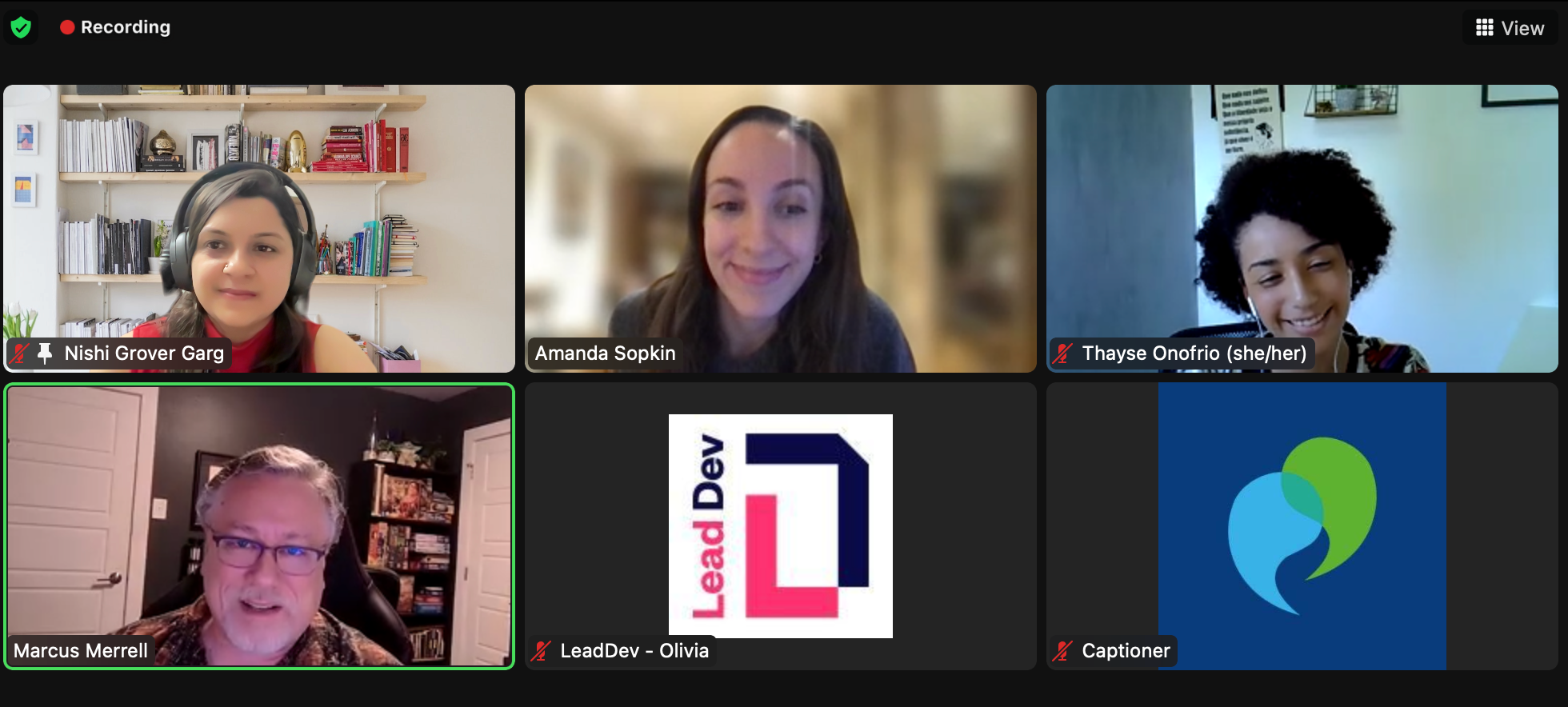
My experience as a Panel speaker @LeadDev webinar

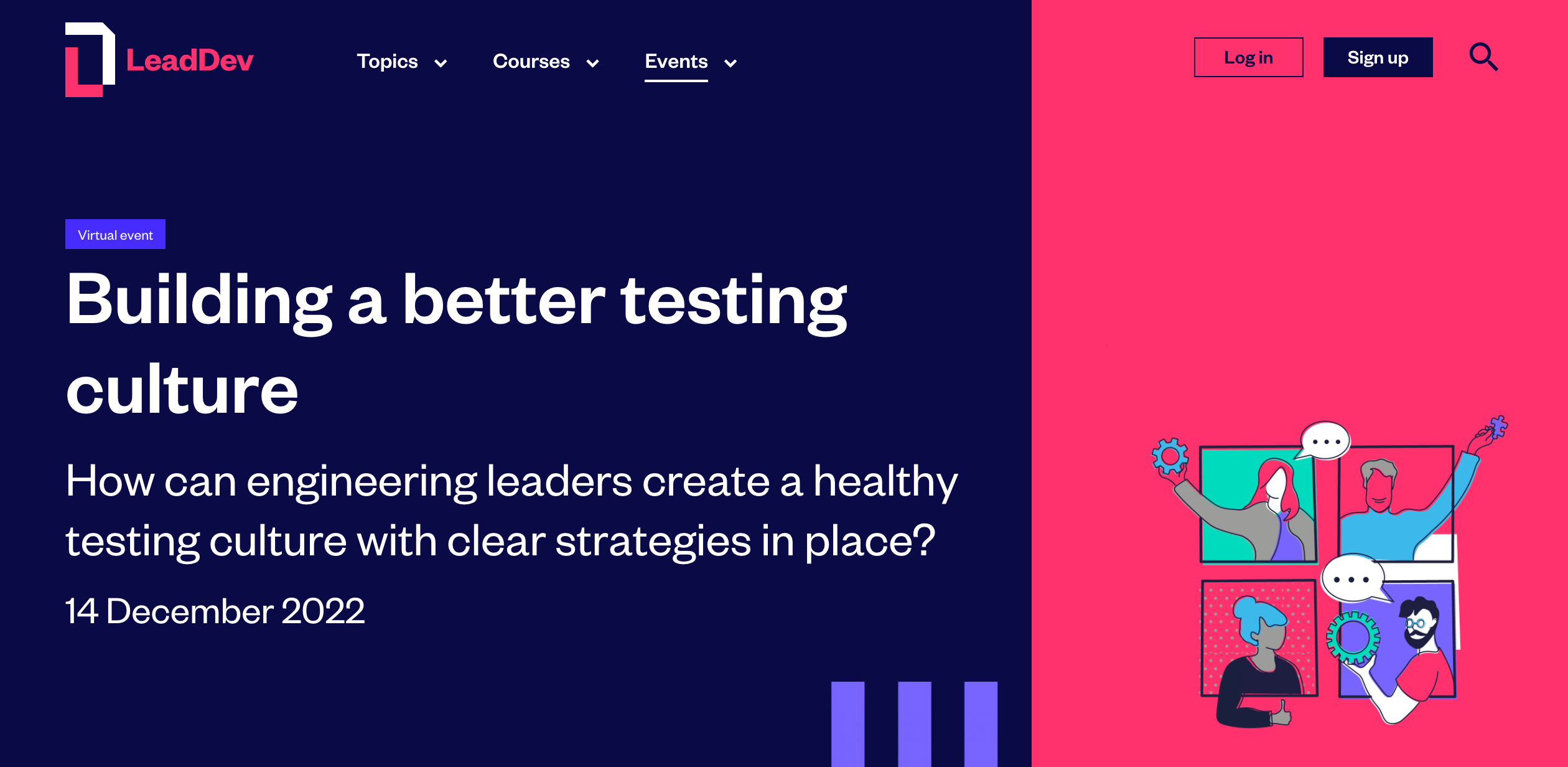
I was invited by @LeadDev organisation to be a part of a webinar where we had a panel discussion on “Building a better testing culture“. I was elated to be a part of this great group pf panelists alongside Thayse Onofrio from Thoughtworks and Marcus Merrell from Saucelabs. We had a spirited and interesting discussion and shared some meaningful ideas on the topic. I would also like to thank our host Amanda Sopkin for her really on-the-nail questions and for directing the conversation, and our organiser Olivia Christian for inviting me and for her support throughout the event!

The webinar panel was live, lasted for 45 minutes and then we had some time for Q&A. There were some great questions and discussions over the LeadDev slack channel as well.

Here is a bit more insight into the event-

The world of software testing is changing under the pressure of ‘speed to market’. The pressure to quickly get products to market means we are starting to see a significant shift towards automated tests during development. This will likely cause socio-technical complexities for orgs and teams currently involved in testing.

In order to be successful through these changes, orgs will need to have a clear strategy and processes in place that will ensure testing is a vital part of the delivery process. In this new age of testing, how can engineering leaders prevent pitfalls such as friction between teams, a culture of blame, and outdated processes?

In this panel, we examined how shift affects traditional testing set-ups, covering what a healthy testing culture looks like and how to avoid the anti-patterns that lead to uncommunicative teams and project bottlenecks. We explored how engineering teams can best work together and how to encourage a shared vision of quality and the importance of efficient and effective tests.

Key takeaways

  • Define clear roles and responsibilities for quality and testing in your org 
  • Encourage QA to be seen as necessary, rather than inhibiting release times 
  • Understand which tests to automate, and which to not

About LeadDev

LeadDev is a community of software engineering leaders that come together to learn and get inspired on all things team, tech, process, and personal development. 

LeadDev has become an essential destination for anyone in tech and engineering who wants to scale themselves and create impact. They provide a range of content that includes articles, thematic content series, video talks and panel discussions, written and delivered by the best voices in engineering.You can register a free LeadDev.com account to gain access to our free engineering leadership content, free online events and our weekly email newsletter.