Empowering Enterprise Growth with Low-Code Platforms

<This is a guest post by Smith Mac>

In the rapidly evolving modern world, business changes in enterprises are violent and frequent, and therefore, the provision of innovative technological, many enterprise organizations adopt low-code development platforms into enabling the enhanced software development processes’ efficiency. In this conclusive and comprehensive tutorial low code aspect is discussed how it impacts organization and it also answers the critical questions with respect to traditional development to help the business to capture tremendous value in developing Ready Enterprise Applications.

1. Empowering Enterprise Outcomes through Low-Code Development

Low-code development platforms are becoming the key drivers of enterprise digital transformation by easing app development approaches. It reduces the practices of manual coding by a considerable amount, reduces time and cost of development while projecting a market growth of more than thirty percent CAGR by-year 2028. In this regard, low-code, by translating development into graphical interfaces, is the enabler for both IT and business personnel and a way to bring additional efficiency to the organization by improving development team’s velocities thus allowing to quickly adapt to market needs. It is friendly with existing IT environments and enhances legacy frameworks and third-party API for maximum return on investment while renewing applications.

Integrating Competitive Advantage into Operations

Implementation of low-code platforms means relatively increased productivity as organisations experience up to 50% reduction in the time to build application and maintaining them. This efficiency helps IT teams to avoid wasting their time on various usual tasks and shift more focus to unique tasks. However, integrated management and security mechanisms reduce the risks involved with Shadow IT, whilst adhering to stringent regulatory requirements. As more enterprises adopt low-code, they are able to deliver more applications faster to market and be more responsive to changing business requirements.

2. How Low-Code Development helps in Unlocking Enterprise Growth

Many organizations have turned to low-code platforms to ensure efficiency during the development phase and align with the DevOps concept. Forrester has it that low-code can help to speed up application delivery by as much as six times while at the same time halving development costs. This efficiency not only improves the speed for operations but also fosters the fairly essential accelerated rate of innovation for competitive advantage.

Low-code also makes application development more accessible to allow business users who are not IT experts to build applications that they require. It encourages cooperation between departments, ensures that IT works towards business objectives, and speeds up the working cycles to provide better customers’ experiences. Furthermore, the top low-code platforms are security and compliance-oriented as innovative security mechanisms are integrated into the platform to ensure proper protection of data and compliance with relevant regulations, thus reducing risks and increasing confidence.

3. Working Through the Problems of Traditional Software Development for the Enterprise

In the current environment of enterprises, the conventional software development faces issues that slow it down and prevent creativity. Complexity of development cycles and increasing costs are also significant projects issues with 68% of projects reporting delays and 45% reporting that their costs were higher than planned because of poor planning and communication. In addition, such methodologies as waterfall restrict the cross-functional team approach, which creates problems with immediate adaptation to market shifts and slows down time to market of key applications.

The primary social challenges for these enterprises are these hurdles, and therefore working with Agile and DevOps practices. There are mainly the following advantages of using agile methodologies: It encourages cross functional and cross organizational collaboration and thus teamwork, because the conditions are fully supportive of fast responses to changes in requirements and markets. Implementing DevOps does not only facilitate development but also increases deployment rates by 30x and reduces failure rates by 60x. Implementing cloud computing solutions, organizations also advance the use of cloud-native ones and microservices to improve scalability and being competitive in the digital market.

4. Realizing Increased Speed & Innovation with Low-Code Capabilities

Low-code is considered to be influencing the application development profoundly as it cuts across the time required in developing and implementing applications I superior ways. As per estimates, the CAGR is over 20% and these platforms dematerialize processes and include citizens, developers and IT persons. Since competition is high in today’s mart, reducing the time-to-market for new products and features are very critical for organizations.

Making the process of building applications accessible to more users is another advantage that comes with the use of low-code solutions. Benefits of collaboration are the ability of allowing users with different technical applications to change programs, processes and develop improvements, hence enjoying the flexibility of responding to the market and consumers’ feedbacks. Companies using low-code claim that their applications are delivered up to 50% faster, and this increases overall business functionality and customer satisfaction.

Additionally, low code enables CI/CD requirements as essential for today’s DevOps frameworks. These are easily integrated with the existing tools and processes and reduce the time spent and errors in the deployment of the software. This helps to liberate the development teams to concentrate on new value creation, thus increasing the organizational flexibility.

5. The Possibilities of Low-Code Solutions for the High-End Business Applications

Leveraging the full potential of low-code as the foundation for delivering enterprise-level solutions is transforming applications development. For enterprises, it represents that adequate use of low-code can avoid much hand-coding in the development of complicated applications, thus shortening the TTM and improving the flexibility. According to the market report, it will exhibit a CAGR of over 25% by 2028; low-code development platforms enable organisations to deliver new solutions at a greater pace.

Read More »
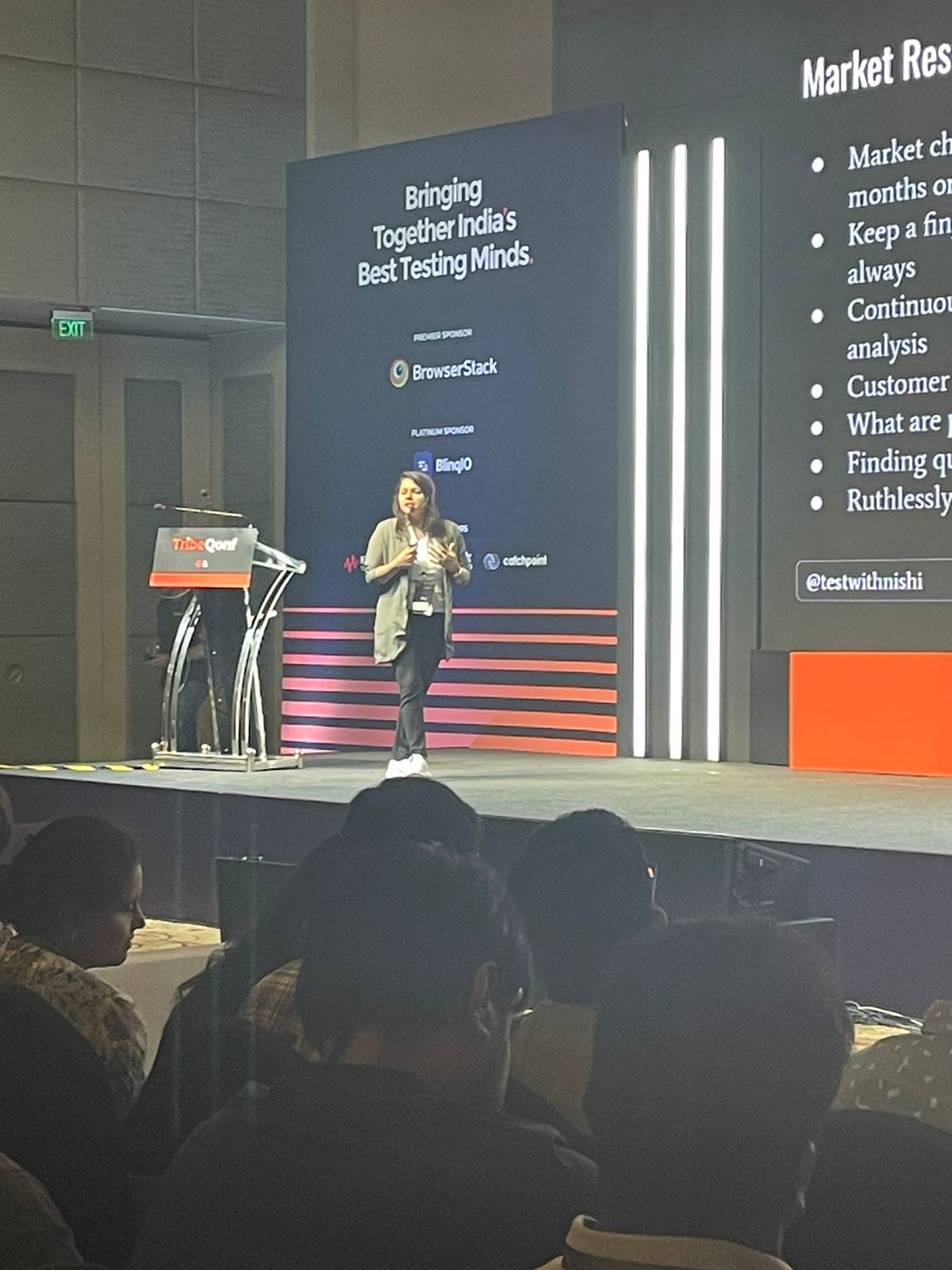
The experience of #TribeQonf 2024

Speaking at #TribeQonf was definitely a highlight of my year so far! What an fantastic event put together by an amazing team led by @Mahesh Chikane, Ashutosh Garg and so many more!

I was excited to see the grand setup, the massive stage was a sight to behold and so was the packed room in front! The hallway was flowing with delegates, sponsor booths and so much chatter, with interesting conversations, networking and smiles in all corners!

So much has already been said by the delegated and esteemed speakers in their posts. This conference surpassed most events in the kind of energy, enthusiasm, connections and learning that was seen and experienced.

My session was all about “Building Harmony in Chaos” wherein we talked about Orchestrating Agile deliveries in a startup environment. It was a jam packed room and definitely a great experience to deliver a session at this scale. I am thankful to have received such great feedback and kind words from the attendees after the session. Here are a few glimpses of my talk:

This event was definitely a highlight of my year so far, and looking forward to many more in the coming months! Thanks for the partnership @The Test Tribe.

Cheers,

Nishi

ERP Trends for the Future

<This is a guest post by Scarlett Hunter>

What is ERP

ERP (Enterprise Resource Planning) is a software that provides a suite of applications to manage the core processes of a business. These processes include finance and accounting, human resources, supply chain, procurement, manufacturing, and customer relationship management. ERP systems are designed to automate and integrate core business processes, providing all information at a single source for easy decision-making.

ERP systems come in different types, and they can be classified based on an organization’s needs, budget, and preferences.

Types of ERP Systems

On-Premise ERPThis type of ERP system is installed on the organization’s in-house servers and hardware. It is maintained and handled by the organization’s IT department. Although it provides greater control over the system, the cost of implementation, hardware, and maintenance is usually high.
Cloud-Based ERPThe software is hosted on a cloud server, and organizations access it via the Internet. They only pay for the software features and modules they need, and the providers generally take care of the hosting, maintenance, and updates. Cloud-based ERP is more affordable than on-premise ERP and is gaining popularity due to the low initial investment and the ability to access data in real-time, from anywhere in the world.
Hybrid ERPThis type of ERP system is a mix of on-premise and cloud-based ERP. The organization can use on-premise implementation to handle sensitive data within the organization, while it puts less sensitive modules on the cloud.
Open-source ERPAn open-source ERP system is a software that is available for anyone to use, customize and distribute. In Open-source ERP, an organization can modify the code to suit its specific business needs. It’s free and provides greater flexibility, but the downside is that the organization must be equipped with IT expertise to handle the system.

Future Trends of ERP

1. AI and Machine Learning

Artificial Intelligence (AI) and Machine Learning (ML) are revolutionizing ERP systems by enabling predictive analytics, machine-to-machine communication, and automated decision-making.

AI and ML algorithms can analyze large datasets and provide insights into areas such as demand forecasting, supply chain optimization, and predictive maintenance.

By automating routine tasks and decision-making processes, businesses can reduce costs, improve accuracy, and free up their employees to focus on more strategic tasks.

2.  Integration with IoT

ERP systems are also integrating with the Internet of Things (IoT) to create smarter supply chains and manufacturing processes.

IoT devices such as sensors, beacons, and RFID tags can collect data in real time, enabling businesses to track inventory levels, monitor production processes, and optimize delivery routes.

By integrating ERP with IoT, businesses can create a truly connected and intelligent supply chain that can predict and respond to changing market conditions.

3. Cloud Deployment

With cloud computing gaining momentum, businesses are shifting towards cloud-based ERP solutions to reduce infrastructure costs, improve scalability, and facilitate remote accessibility.

Cloud deployment allows businesses to access ERP systems from anywhere and at any time, enabling employees to work remotely and collaborate more effectively.

It also provides better security measures than on-premise solutions since data is stored on cloud servers and is protected by multiple layers of security protocols.

4. Mobility

With the increasing use of smartphones and tablets, employees are no longer tied to their desks and can use their mobile devices to access ERP systems.

Mobile ERP solutions offer real-time access to data, allowing employees to stay informed of critical business processes such as inventory, sales, production, and delivery status.

Mobile ERP solutions also provide push notifications and alerts, enabling employees to take immediate action on any issues or opportunities.

5. Customization

Customers are increasingly demanding personalized experiences, and businesses are responding by customizing their products and services to meet these demands.

ERP systems are also becoming more customizable, allowing businesses to tailor their solutions to their specific needs. Customization can include adding new modules, integrating with third-party applications, and configuring workflows to suit specific business processes.

Customization enables businesses to differentiate themselves from their competitors and provide unique value to their customers.

Conclusion

From the above discussion, it is clear that there are multiple trends that are coming onto the surface such as cloud deployment, mobility, AI and ML, integration with IoT, and customization are all major trends that are shaping the future of ERP systems. By adopting these trends, businesses can gain a competitive edge, optimize their operations, and provide exceptional customer experiences.

<This is a guest post

Author- Scarlett Hunter | Python Developer | Contact: scarletthunter202@gmail.com >

How to Decide if You Should Automate a Test Case

Test automation is imperative for the fast-paced agile projects of today. Testers need to continuously plan, design and execute automated tests to ensure the quality of the software. But the most important task is to decide what to automate first.

In my article published on the TestRail Quality Hub, I have compiled & shared a list of questions to help you prioritise what you should automate next and guide your test automation strategy.

Here is a checklist of questions to ask yourself as you decide on automating a Test Case–

*******

Is the test going to be repeated?

Is it a high-priority feature? 

Do you need to run the test with multiple datasets or paths? 

Is it a Regression or Smoke Test?

Does this automation lie within the feasibility of your chosen test automation tool?

Is the area of your app that this is testing prone to change?

Is it a Random Negative Test?

Can these tests be executed in parallel, or only in sequential order?

Are you doing it only for the reports?

********

For the detailed explanation of each of these points, read the complete article here –>

Things to Do Before the Sprint Planning Meeting

Scrum teams get together to decide on the work items for their next sprint in the sprint planning meeting. But is that the beginning of the conversation for the upcoming sprint, or are there some things that should be done before that?

In my latest article for the TestRail blog, find out what you should be doing before your sprint planning meeting even starts so that you can help make the next sprint successful.

Prioritize the backlog

Prioritize!

The first and most important consideration is to have a live product backlog that is up to date and prioritized with changing business needs. The product owner must have a constant eye on adding, removing, editing and updating items in the product backlog. When the time approaches to get into planning the next sprint, the product manager must bring to the table a list of the highest-value items that the team can pick from.

Research features

The product owner must spend time researching each of the features and trying to lay out in simple terms the actual need they each describe. They may use bulleted points or simple sentences to explain the feature in some detail. We see this happening mostly during or after the sprint planning meeting, but if any requirements are known before the meeting, the product owner can get a head start.

Read More »

Speaking at the DevOps & Agile Testing Summit – 8Nov’19, Bangalore

I was invited to speak at the DevOps and Agile testing Summit organised and conducted by 1.21GWs on 8th Nov 2019 at Bangalore. It was a great event which brought together many keen minds as delegates and many inspiring speakers. https://1point21gws.com/devops/bangalore/

My talk was on “The Building Blocks of a Robust Test Automation Strategy”. As we know testing teams are faced with a number of questions, decisions and challenges throughout their test automation journey. But there is no single solution for their varied problems! In this talk I outlined a number of strategies that agile teams can follow– be it their selection of what to automate and how much, what approaches to follow, whom to involve, and when to schedule these tasks so that the releases are of best quality.

I am grateful that my talk was so well received and led to great discussions later with many participants. I enjoyed the day and am always glad to be invited by the 1.21GWs team.

A peek into the event – pictures from my session

@Sahi Pro was also a knowledge partner at the event and delegates also got a peek into Sahi Pro via video and brochure handouts.

Looking forward to many more successful events! 🙂

I am speaking at ‘Targeting Quality 2019’ , Canada

I am super excited to be speaking at this grand event TQ2019 being organised by KWSQA on 23-24 Sep in Canada!

On top of that I get to present not one but 2 talks!! My topics are

“The What, When & How of Test Automation” 45 mins

In this I will talk about preparing robust automation strategies. Agile means pace and agile means change. With frequent time boxed releases and flexible requirements, test automation faces numerous challenges. Haven’t we all asked what to automate and how to go about the daily tasks with the automation cloud looming over our heads. Here we’ll discuss answers to some of these questions and try to outline a number of approaches that agile teams can take in their selection of what to automate, how to go about their automation and whom to involve, and when to schedule these tasks so that the releases are debt free and of best quality.

“Gamify your Agile workplace”    15 mins

In this I’ll present live some innovation games and have audience volunteers engage and play games based on known scenarios. Let’s Play and learn some useful Innovation Games that can help you gamify your agile team and workplace, making the team meetings shorter and communication more fun!

Both these topics are close to my heart and I am looking forward to sharing my thoughts with a wider audience.

I am also excited to meet all the awesome speakers at the event , as well as get to know the fantastic team of organizers behind this event!

Check out the detailed agenda here – https://kwsqa.org/tq2019/schedule/

Follow me at @testwithnishi, @KWSQA and #TQ2019 on twitter for more updates on the event!

Also check out & support other initiatives by KWSQA at https://kwsqa.org/kwalitytalks/

Wish me luck! 🙂

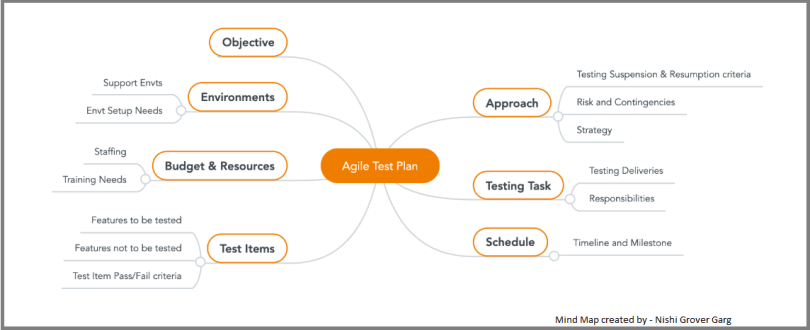
Using Mind Maps for Agile Test Planning

Mind maps are a creative way of gathering ideas around a central theme and categorizing them in concrete branches. Mind maps can be useful for both personal and professional life as an organization and visualization technique. They’re descriptive, easy and even fun.

In my latest post for Gurock blog, I showcase the usage of mind maps as a technique for test planning and test design. This tool’s capabilities make your documentation leaner and ideas more visual, which benefits the whole agile team.
https://blog.gurock.com/agile-mind-map/

Be it test planning in an agile team which needs entire team’s insights and collaboration, or categorization of product features, test areas and backlog, Mindmaps can be used for all aspects and phases of the project.

Testers can generate their test ideas and have them categorized in a mind map around the central theme of the feature. The visual nature of a mind map helps them find more scenarios, see which parts are more heavily tested, and focus on main areas or branches. Once done, they can have other stakeholders take a look at it and get their opinions. This fosters brainstorming together and gathers the maximum number of ideas from the entire team.

Find useful tips to create your own mindmaps, as well as some samples for your reference in agile test designing as well as test planning. Read the complete article here ->
https://blog.gurock.com/agile-mind-map/

To learn more about the basics of Mind Mapping and its benefits, read this comprehensive guide that will uncover your mind’s potential and let it soar on the wings of creativity. Mind maps offer an incredibly flexible, accessible, and applicable way to memorize new information. You should try this effective tool for organizing ideas if improving your productivity and the quality of your academic achievements is something you’re interested in.

Share your thoughts!