How to Build and Nurture an Effective Team to Help Your Business Grow

It doesn’t matter the industry – all business owners want to see their organization succeed over time. For many, this may mean exploring new markets or creating new essential products or services for customers. However, the real path to success relies on having a strong team to help drive a company forward.

Still, creating a highly motivated team isn’t always an easy accomplishment. It takes dedication and hard work not only to acquire the right team members but also to ensure they continuously recognize and respect their role in helping the business develop.

Thankfully, there are various proven strategies for establishing the right culture for your business and maximizing its chances of success.

Inspiring Your Team with a Compelling Company Vision

Success is defined differently by each business. While some may think success is seeing profits grow double-digit year over year, others prioritize something deeper for their organization and the individuals working in it.

For most businesses to be successful, their employees need to share the same level of passion as company leadership. Communication is an important element in helping this happen. Every team member, regardless of their role in the company, should understand how their individual efforts impact the organization’s overall goals.

When employees are able to connect the dots between their performance and the performance of the company, it helps to give them a renewed sense of purpose each day. Below are a few ways business leaders can work to make this happen:

  • Speak a Universal language – The vision you express should be clear and easily understandable to a wide range of employees. Regardless of the level of experience of each employee, everyone should be able to recognize the message being expressed and how to contribute to larger company objectives.
  • Help Bridge the Gap Between Vision and Action – While articulating your vision clearly is important, this effort alone isn’t enough. You also need to show employees exactly how their individual roles and daily tasks make a difference when achieving the goals set out for the business.
  • Lead With Integrity – One of the most influential ways for leaders to help their teams live up to a company’s vision is by doing so themselves. All business leaders should fully embody the values and principles they set out for their teams. Leading with integrity in all areas of the business helps to create a culture of authenticity and helps everyone stay accountable day-to-day.

Creating a Shared Sense of Purpose

Helping your team to have a shared sense of purpose is an important component of helping your company vision come to life. When everyone works together to achieve the same goals, more is able to be accomplished and milestones are more easy to attain.

One of the best ways to create a shared sense of purpose is by encouraging employees to get involved as much as possible. This means making sure they feel valued enough to regularly share their ideas, ask questions, and contribute more toward shaping the business.

Another important element of getting employees involved more is creating knowledge-sharing opportunities. To do this, you could create specific communication channels across your organization where employees can more freely exchange new ideas or simply celebrate each other’s successes.

Unifying everyone in the company is an important part of sharing a broader purpose. This is why looking for more opportunities to bring everyone together and discuss new challenges, opportunities, successes, and even failures is a great way to help everyone feel like they’re part of something significant.

Equipping Your Team for Success

Read More »

Using Examples of Successful Brands to Overcome Team-Building Issues

Building a business from the ground up can be challenging but rewarding. Although it can take patience to develop unique products and services while surrounding yourself with talented individuals, most businesses that put in the work can see positive increases in their revenue streams and profitability.

However, one of the most important things to get right when running a business is having a dedicated team of employees willing to go the extra mile. Still, this isn’t easy for businesses to master. As organizations begin to scale, most feel certain constraints that can negatively impact productivity and potentially stall growth efforts.

To overcome these issues successfully, businesses should adopt a resilient attitude in adapting to changes in their operations while looking for better ways to collaborate and improve their teams’ capabilities. In fact, there are some great examples businesses can learn from some of today’s top brands that have already done the same.

Common Team-Building Roadblocks Businesses Face

As businesses begin to grow, they often experience certain challenges that can test their ability to remain resilient. Many of these challenges can materialize internally, with employees beginning to struggle to keep up with changes or maintain the same level of enthusiasm they once had.

This often creates inevitable roadblocks, making it hard for a business to move forward. Some of the common team-building challenges that can surface include:

Poor Communication Practices

A good majority of businesses put a lot of effort into ensuring they maintain healthy levels of communication with their employees. Still, many organizations experience highs and lows when it comes to how well departments collaborate with one another.

One of the common working formats for many businesses today is having a decentralized workforce. While allowing this level of flexibility in employee scheduling and working location can be highly convenient, it can often result in information silos, with only certain teams having the information necessary to manage projects effectively.

Fragmented communication in a business can severely harm its progress. Just as electricians and plumbers must work closely with contractors to ensure bathroom remodels, or living room expansions go smoothly in home renovation projects, businesses must prioritize transparency between their departments to succeed.

Loss of Trust From Employees

Employees need to respect their employer to feel confident enough to give 100%. However, to develop respect, employees need to trust their leadership teams and feel valued more than just another number in the organization.

Although trust can be difficult to earn, especially in the early stages of an employee’s tenure, it can easily be lost. Unfortunately, when a company puts the majority of its focus on developing new revenue streams and maximizing profitability, it can start to lose focus on developing strong relationships with employees.
When employees begin to lose trust in their employers, it can often lead to negative attitudes that can quickly start to degrade the company culture. This makes it much harder to keep employees and attract new talent.

Unclear Company Purpose

Simply increasing revenue doesn’t mean a business can or will be successful. As a business grows, it becomes increasingly more difficult to maintain alignment with initial business objectives, leading to a disorienting state that can negatively affect operational efficiency.

As company departments begin losing their cohesion, this can damage a business’s long-term sustainability. Many times, these issues might be subtle at first, with employees forgetting about their primary responsibilities or missing a few deadlines. However, over time, these seemingly minor issues can become a much larger issue.

Resistance to Change

For many people, change isn’t something that is easy to accept. While it’s easy for businesses to say that they’re “OK with change” or “willing to improve their processes,” the reality is usually much different.

Change can make many individuals uneasy, especially when it means leaving a certain comfort zone. This can apply to both business leaders and employees who are tasked with updating their workflows or shifting their daily priorities.

However, having too much resistance to change can be a major roadblock for organizations that want to grow. Leadership teams clinging to outdated sales strategies or having too many employees who don’t feel the need to learn and develop their skills can make a business stagnant and eventually start moving in the wrong direction.

Successful Companies That Have Managed to Overcome Leadership Issues

Read More »

My experience as a Panel speaker @LeadDev webinar

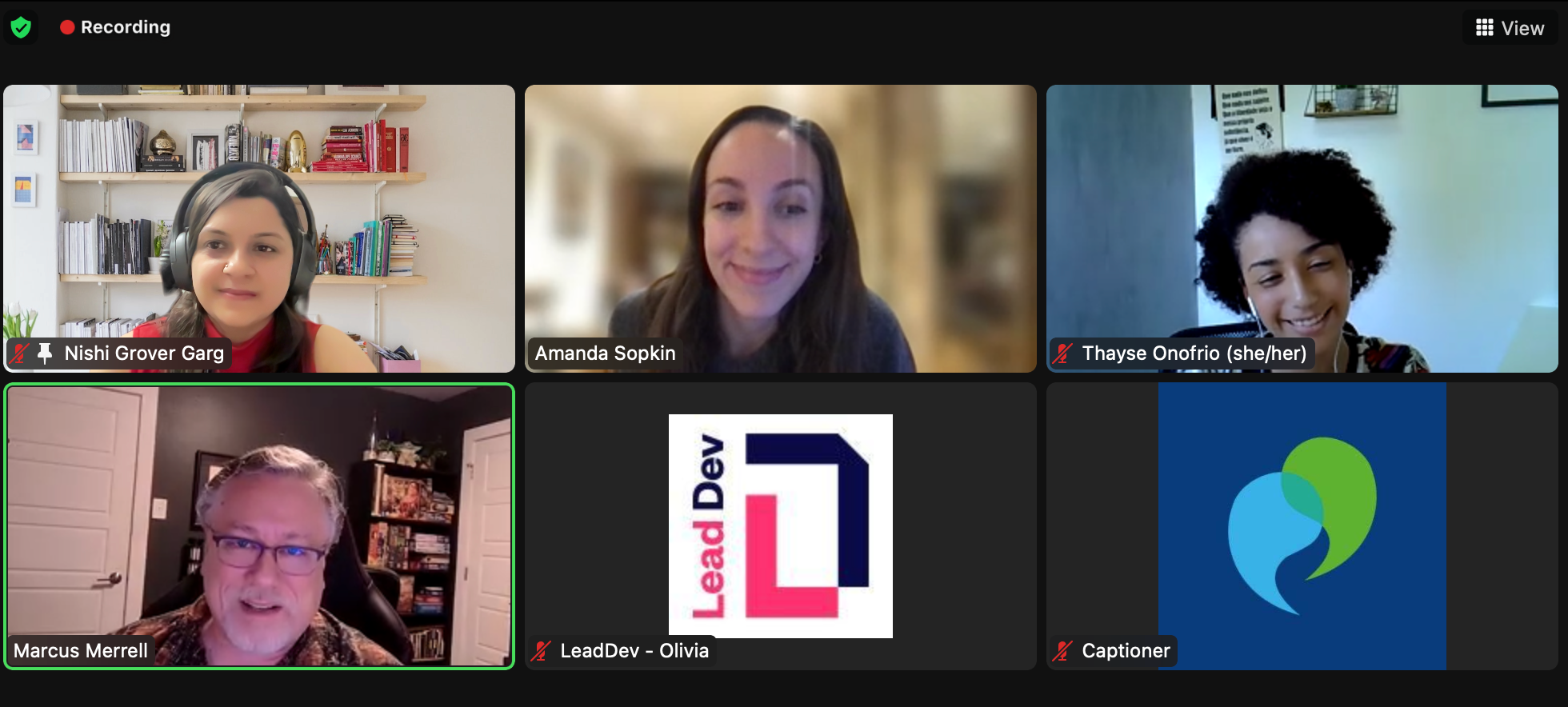
I was invited by @LeadDev organisation to be a part of a webinar where we had a panel discussion on “Building a better testing culture“. I was elated to be a part of this great group pf panelists alongside Thayse Onofrio from Thoughtworks and Marcus Merrell from Saucelabs. We had a spirited and interesting discussion and shared some meaningful ideas on the topic. I would also like to thank our host Amanda Sopkin for her really on-the-nail questions and for directing the conversation, and our organiser Olivia Christian for inviting me and for her support throughout the event!

The webinar panel was live, lasted for 45 minutes and then we had some time for Q&A. There were some great questions and discussions over the LeadDev slack channel as well.

Here is a bit more insight into the event-

The world of software testing is changing under the pressure of ‘speed to market’. The pressure to quickly get products to market means we are starting to see a significant shift towards automated tests during development. This will likely cause socio-technical complexities for orgs and teams currently involved in testing.

In order to be successful through these changes, orgs will need to have a clear strategy and processes in place that will ensure testing is a vital part of the delivery process. In this new age of testing, how can engineering leaders prevent pitfalls such as friction between teams, a culture of blame, and outdated processes?

In this panel, we examined how shift affects traditional testing set-ups, covering what a healthy testing culture looks like and how to avoid the anti-patterns that lead to uncommunicative teams and project bottlenecks. We explored how engineering teams can best work together and how to encourage a shared vision of quality and the importance of efficient and effective tests.

Key takeaways

  • Define clear roles and responsibilities for quality and testing in your org 
  • Encourage QA to be seen as necessary, rather than inhibiting release times 
  • Understand which tests to automate, and which to not

About LeadDev

LeadDev is a community of software engineering leaders that come together to learn and get inspired on all things team, tech, process, and personal development. 

LeadDev has become an essential destination for anyone in tech and engineering who wants to scale themselves and create impact. They provide a range of content that includes articles, thematic content series, video talks and panel discussions, written and delivered by the best voices in engineering.You can register a free LeadDev.com account to gain access to our free engineering leadership content, free online events and our weekly email newsletter. 

I am Speaking @ LeadDev Webinar Panel – Dec 14th

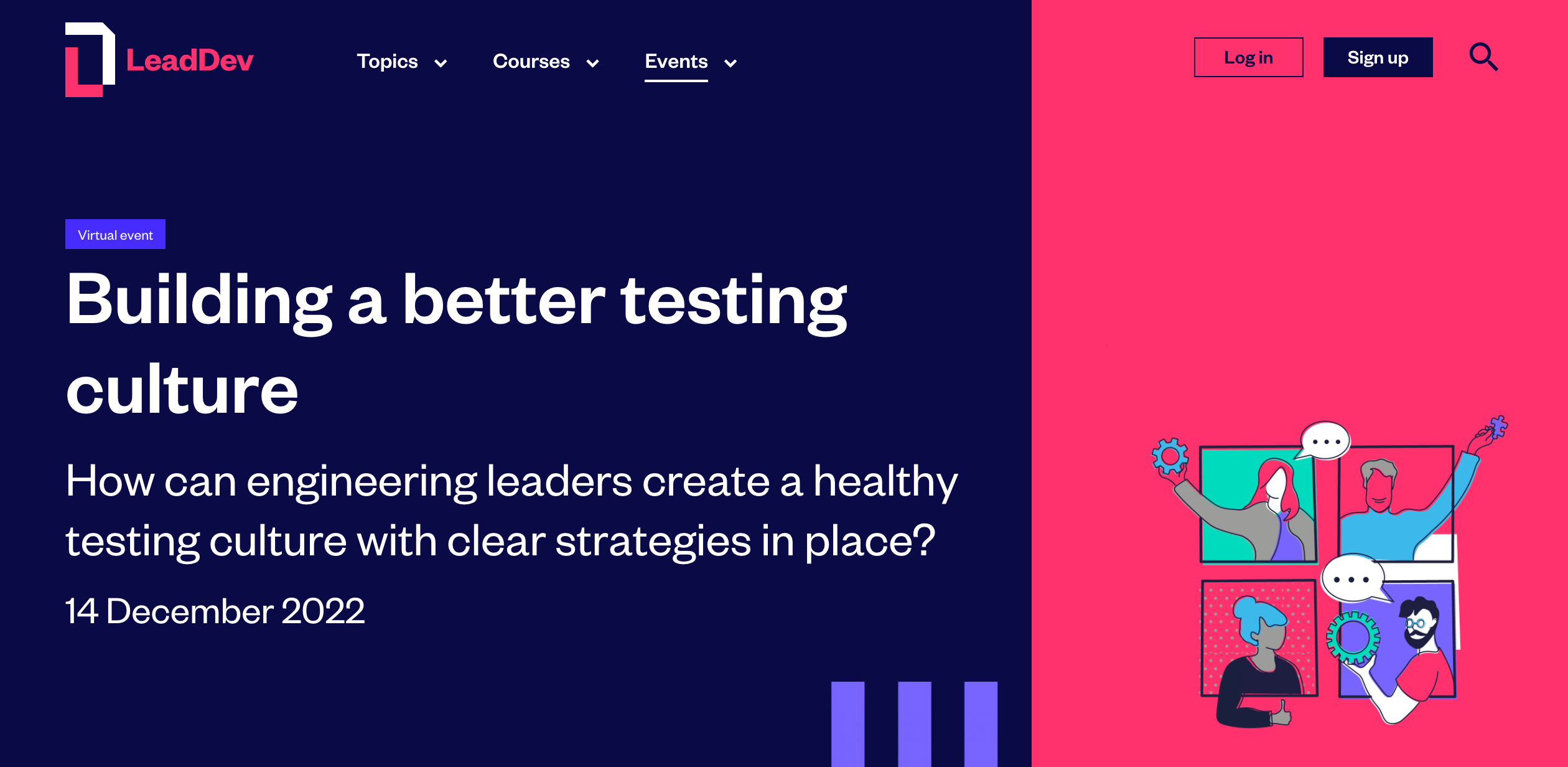
I am super glad to announce that I have been invited by the LeadDev team as a Panel speaker in the upcoming Webinar on “Building a better Testing culture”

The webinar will be held on 14th December at 10.15 PM IST. Details for registration can be found here https://leaddev.com/events/building-better-testing-culture

I am thrilled to be a part of this amazing group of panelists and chat about building amazing teams and a great team culture in this new age of testing. We will be covering what a healthy testing culture looks like and how to avoid the anti-patterns that lead to uncommunicative teams and project bottlenecks!

To top it all, this is a free event!! So, you can register a free LeadDev.com account to secure your place. Not only this, your account will give you access to our free engineering leadership content, free online events and our weekly email newsletter. 

Register here now to attend this awesome event and become a part of this amazing LeadDev Community!

See you there!