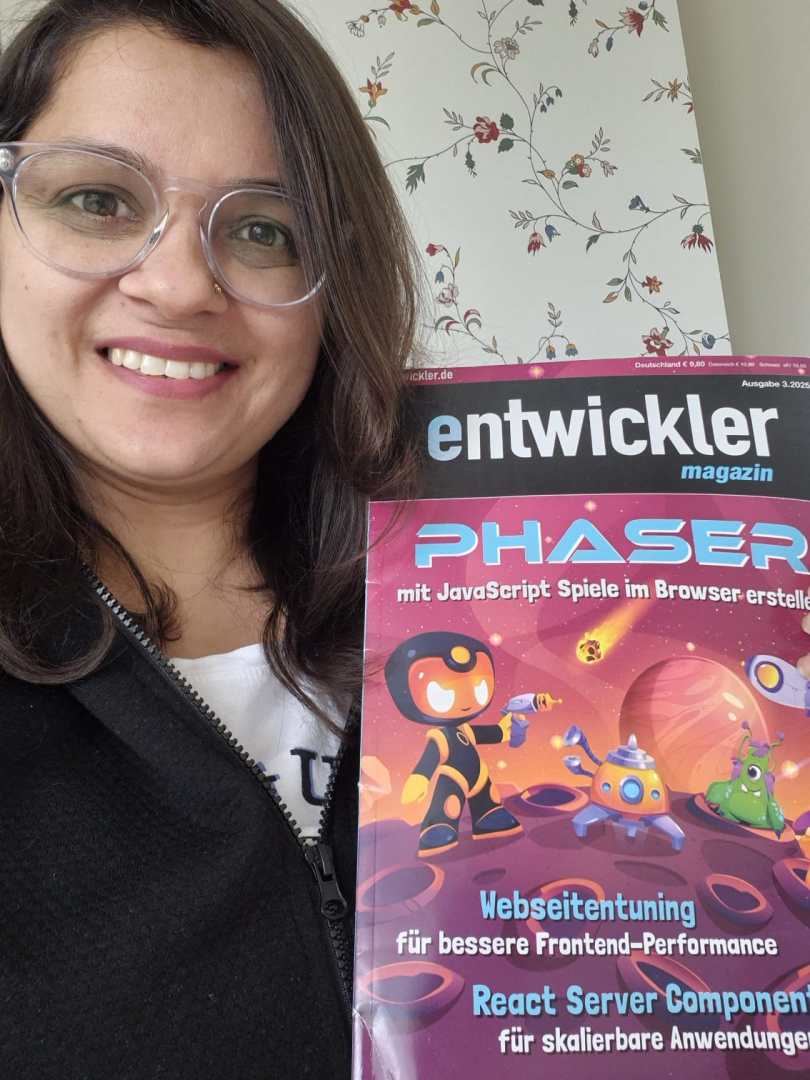
Thrilled to see my name in print — in German!

Thrilled to see my name in print — in German!! 🇩🇪📖

When I first wrote this article on Continuous Testing in Agile—highlighting the need to balance speed with quality, and keep the “wheels of testing” running—I had no idea it would travel this far.
But today, I’m proud to share that my work has been published in the print edition of Entwickler.de, one of Germany’s most respected tech magazines! 🎉

Originally written in English and translated by the amazing editorial team, the article is titled:
🔍 “Die Räder des Testens am Laufen halten”
(“Keeping the Wheels of Testing Running”)
— and dives deep into how Agile teams can stay efficient and resilient with continuous testing strategies, even in fast-paced delivery cycles.

🧪 From quality thinking to adaptive test environments, the article covers the mindset and methods teams need to deliver great software, consistently.

💜 A big thank you to the Entwickler.de team for beautifully presenting the article and sending me a print copy that I’ll treasure.
🙏 And a warm shoutout to the Devmio team as well for our collaboration and continued support in sharing meaningful conversations around DevOps and Quality at Scale.

Here’s to celebrating small wins, sharing knowledge, and seeing our ideas come to life across borders and languages! 🌍✍️

📖 Read the article here:
👉 https://entwickler.de/testing/die-rader-des-testens-am-laufen-halten-002

#ProudMoment #ContinuousTesting #AgileQuality #DevOps #EntwicklerDe #AgileTesting #TechWriting #DevOpsCon #WomenInTech #TestAutomation #QualityAtScale #KnowledgeSharing #AgileLeadership #PublishedAuthor #FromIdeaToPrint

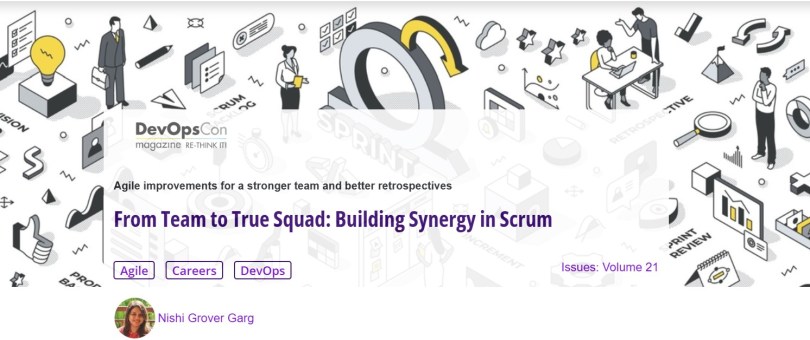
From Team to True Squad: Building Synergy in Scrum

I’m excited to share my latest article, “From Team to True Squad: Building Synergy in Scrum,” recently published on Devm.io!

We often hear about the importance of teamwork when we talk about agile and Scrum in particular. But there’s a massive difference between a group of individuals that work together and a squad that truly clicks. Building a high-performing Scrum team is less about following rigid frameworks and more about nurturing relationships, creating trust and creating a shared vision & sense of purpose. What truly elevates a group of individuals into a high-performing squad is synergy—that magical cohesion where the whole is greater than the sum of its parts.

Key Insights from the Article

🔹 Continuous Improvement: Agile squads thrive when retrospectives are used not just as a ritual but as a powerful tool for learning and growth. The key is to focus on actionable feedback, addressing both the wins and the pain points. Improvement isn’t a one-time event; it’s a mindset that fosters resilience and adaptability.

🔹 Alignment with Autonomy: Balancing squad goals with overarching organizational objectives can be tricky, but it’s essential. Alignment ensures that the team delivers value, while autonomy empowers them to decide how to deliver it, fueling innovation and ownership.

🔹 The Role of Trust: A true squad is built on a foundation of trust. When team members trust each other, they feel safe to share ideas, challenge norms, and admit mistakes—without fear of blame or judgment. This psychological safety is the bedrock of creativity, collaboration, and continuous improvement. Leaders must actively foster trust by encouraging open dialogue, leading by example, and celebrating team wins.

🔹 Fostering Synergy: Building synergy means creating an environment where collaboration isn’t just encouraged—it’s ingrained in the squad’s DNA. This involves clear communication, shared accountability, and a shared vision of success.

Why It Matters

Agile is more than a process; it’s a way of thinking. When squads embody these principles, they don’t just deliver—they innovate, inspire, and transform.

📖 Read the full article here: From Team to True Squad: Building Synergy in Scrum

I’d love to hear your thoughts:

  • How do you foster trust within your teams?
  • What strategies have helped your squads achieve true synergy?

Let’s discuss and share ideas!

#AgileLeadership #TeamSynergy #ScrumMastery #TrustInTeams #ContinuousImprovement #AgileSquads #LeadershipMatters #DevOps

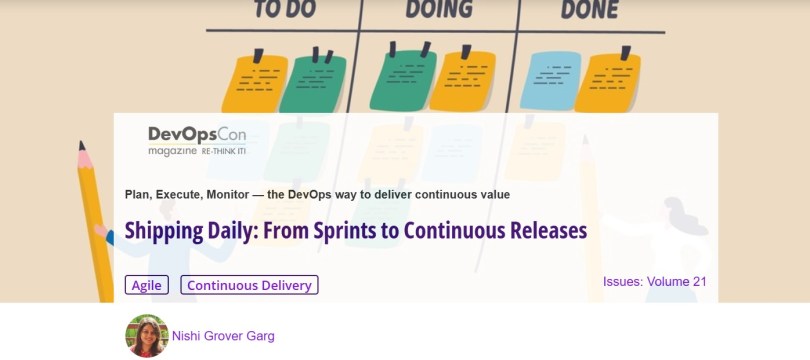
Shipping Daily : From Sprints to Continuous Releases

DevOps Teams that achieve daily releases have mastered a unique set of skills and practices to ship software faster and more frequently, with higher confidence. This high frequency release model differs significantly from the traditional Scrum framework with 2-week sprints (or longer). 

I wrote about this recently in my article published at devm.io platform , where I discussed the daily routines, processes and tools that support these teams, while contrasting them with more familiar cadence of traditional scrum teams. For teams and organizations looking to move towards daily releases, I also covered the key adjustments required to turn this vision into reality.

The Daily Rhythm: Planning, Execution, and Monitoring

1. Planning

For teams delivering code daily, the rhythm of planning, execution and monitoring does not follow the two-week sprint cycle but happens continuously. Here is what this daily rhythm looks like:

  • Frequent Prioritization: Daily release teams prioritize their work each day, selecting high impact tasks that can be completed and shipped within a single day.
  • Dynamic Backlogs: Instead of working with a static sprint backlog which is derived from the mammoth product backlog, these teams operate with highly flexible backlogs – adding things to it every day. They are ready to pivot quickly in response to customer feedback or issues, urgent needs or new business opportunities.
  • Smaller Targeted Tasks: Work items are broken into small, manageable pieces – each designed to be completed within hours. User stories and tasks are refined to be achievable in less than a day, keeping workloads manageable and ensuring that work completed aligns with daily release goals.

2. Execution

Unlike Scrum teams that often release at the end of a sprint, daily release teams execute work with a focus on immediate delivery.

  • Incremental Work: Instead of waiting until the end of a sprint, developers push small, frequent changes every day. Every code change is designed to be testable and deployable at the end of the day.
  • Automated Testing: It is critical to daily releases. CI pipelines are designed to run tests on each code change, ensuring stability and reliability and readiness of production.
  • Seamless Deployment: CD pipelines are in place, so that the code – once tested – is deployed automatically to production. With daily releases, teams cannot afford to spend hours on deployment activity every single day – so it is imperative to automate it.

3. Monitoring

  • Automated Monitoring: Monitoring tools track deployment success, system performance, and error rates in real time. Tools like Datadog, New Relic, or Prometheus help track application performance, error rates and system health. These tools are crucial for catching issues early and preventing them from impacting users.
  • Daily Retrospective Feedback Loops: Instead of waiting until the end of a sprint, the team reviews their daily progress and identifies immediate improvements – leading to quick adjustments.

Read the full article here for details on :

Normal Scrum vs Daily Release : Key Differences

Practices to Support Daily Releases

Key Metrics to Track

When are Daily Releases Appropriate?

Benefits of Daily Releases

Agile Metrics that Matter: Measuring Success in Software Delivery

In the world of software delivery, the agile approach has transformed the way teams work, adapt and succeed. Agile is all about delivering value quickly and iteratively, but how do we know our team is succeeding at that? The answer will lie in the metrics we track.

I tried to answer this in my article that was published on devm.io platform recently.

Why Metrics Matter in Agile

Agile metrics provide valuable insights into:

  • the health of our processes,
  • helping us make informed decisions,
  • identifying areas of improvement and, eventually,
  • delivering better software.

Before we get into specific metrics, it is important to understand why tracking metrics is crucial in agile development.

Agile thrives on feedback – whether it is from users, stakeholder, or the development process itself. Metrics provide that feedback, helping teams understand where they stand and where they need to go.

Metrics help us answer critical questions:

  • Are we delivering value quickly enough?
  • Are we maintaining quality as we move fast?
  • Are our customers satisfied with the product?
  • Where are the bottlenecks in our process?

Without metrics, these questions are left to guesswork.

With metrics, you have data-driven insights that guide decision-making, foster continuous improvement and ensure alignment with business goals.

Let us explore the key metrics that agile teams should track to measure success in software delivery.

1. Lead Time and Cycle Time

Lead time is the time taken for a piece of work from request to delivery. It includes everything from the requirement coming in, to the idea generation, coding, testing & deployment.

Cycle time is the time it takes to complete a specific task or user story from the moment work starts on it to when it is finished. Unlike lead time, cycle time doesn’t include the time spent in backlog or waiting for the work to start.

In agile, the goal is to deliver value quickly & frequently. Lead time tells you how quickly your team can turn ideas into working functionality. Shorter lead time would indicate a more efficient process and better response to market changes.

Cycle time helps you understand the efficiency of your team’s workflow, and how long it takes to deliver a piece of work once it is in progress. Shorter cycle times mean that the team is working efficiently and can handle more tasks within a sprint.

—- Follow the link to read further —–

https://devm.io/agile/agile-metrics-software-delivery-analyze

About devmio

devmio is an IT and Tech conference platform that goes beyond the conference room. Join live events, read magazines and articles from the IT experts you know and love! You can join the live events to chat with experts, read magazines written by experts and attend conferences with exclusive discounts all accessible with their Fullstack Experience membership. Join here -> https://devm.io/

New Country. New Life. Same Drive for Growth. 🌍🚀

A Life Update!


A few weeks ago, I took one of the biggest leaps of my life—I moved to a new country.

Hello, Netherlands!

This journey has been nothing short of transformative. From navigating unfamiliar streets to trying to learning a new language, looking for a home, and finding my rhythm in a completely new environment—every day continues to bring its own set of challenges and lessons.

But with every challenge comes growth. 🌱

Moving to a new country isn’t just about geography—it’s about rediscovering yourself, stepping out of your comfort zone, and embracing the unknown. it is not easy to wrap up a life you’ve known forever and built for yourself, and just leave with a few suitcases and heaps of memories – in search for something that is calling for you from hundreds of miles away…. But when were we ever made for ‘easy’ things? After all —

“A ship in harbor is safe, but that is not what ships are built for.” – John A. Shedd

It’s about giving up the comfort and luxury of every ‘known’ , and starting from ground up.

It’s all about learning to adapt, staying resilient, and building connections that make the transition easier.

It is about being Agile!

As an experienced Agile professional with a passion for driving team success, collaboration, and continuous improvement, I’m now actively looking for my next career opportunity in this incredible city.

📢 To my fellow #Agile practitioners, leaders, scrum masters and #QAprofessionals in #Amsterdam:
If you’re part of this vibrant tech and Agile ecosystem, let’s connect! I’m eager to bring my experience in Agile coaching, leadership, and transformation to a team that values collaboration, innovation, and growth.

This is more than just a professional journey—it’s a personal one. And I’d love to connect with people who share similar values and can guide, mentor, or simply share a coffee and a conversation. ☕

To anyone else considering taking a big step like this—trust the process. It’s not easy, but it’s worth it.

Here’s to new beginnings, endless possibilities, and the courage to create a life you truly love!🌟

Cheers,

Nishi

Confronting Technical Debt: Making the Case for Investment in Long-Term Quality

Technical debt is like the credit card debt of the software world – easy to accumulate but expensive to pay off if not managed. Technical debt occurs when shortcuts are taken during the development process, often to meet tight deadlines or push out new features quickly. With agile’s fast pace, it is easy to accumulate technical debt, justifying it as the need of the hour and need of the market. But just like credit card debt, the interest from technical debt compounds over time, making future changes harder, more expensive and riskier. The question many development teams face is how to convince the leadership to invest in resolving technical debt, even when everything seems to be working fine on the surface.

I recently wrote this article for the devm.io platform where I explore effective strategies for communicating the hidden costs of technical debt, demonstrating its impact on innovation, and making a compelling case for prioritizing it – even if it means temporarily slowing down feature delivery. By understanding and articulating the true risks of technical debt, you can help your team invest in long term health and scalability of your product.

The Hidden Costs of Technical Debt

Many teams struggle with increasing time to production, decreasing velocity sprint-after-sprint and it might begin to seem like the team’s productivity is decreasing over time. The most dangerous aspect of technical debt is its impact on your team’s ability to innovate and scale. At first glance, technical debt may not seem like a pressing issue – since the software is running smoothly and features are being delivered. The problem is that technical debt accumulates gradually and its effects remain hidden until they reach a tipping point.

Every shortcut taken, like skipping tests, avoiding refactoring, hardcoding solutions or neglecting peer reviews – creates complexity in your codebase. As this complexity builds up, it slows down your development process, increases the likelihood of issues, makes future enhancements more difficult and time consuming.

Not only this, there may be instances when these skipped actions are actually mandatorily needed for certain regulations, contracts or standards that we adhere to. This means the team would end up having to do them later, spending more time and causing delays in our project completion.

To read the complete article, visit the devm.io platform

<My article published at devm.io platform: https://devm.io/agile/technical-debt-costs-strategies>

Revolutionizing Manual Testing: Top Trends to Watch in 2025

Manual testing is vital in the context of software development lifecycle. Although manual testing has undergone significant change over the years, its relevance continues to be of immense value. The manual testing process involves designing test cases on the basis of software specifications as well as requirements.

The year 2025 will definitely mark a transformative phase when it comes to manual testing. Advanced technologies may play a key role in the year. These elements can magnify the importance of manual QA testing services.

Some of the major trends that have been covered in the article are Test Augmentation with AI and ML, Exploratory Testing, Seamless Integration with DevOps, Shift Towards Quality Engineering Mindset, No-Code and Low-Code Testing Platforms, Collaborative Testing with Cross-Functional Teams and Remote and Crowdsourced Testing.

The Current State of Testing

To understand the current state of manual testing, you must understand its role in the Agile Era. Additionally, the current concerns of manual testers cannot be ignored.

Importance of Software Testing in the Agile Era

In the Agile Era, the relevance and importance of manual testing have certainly surged. Without manual testing, it is impossible to think of different aspects of the software development lifecycle, such as usability, exploratory testing, and human-centric design. A trusted manual testing service provider can ensure that holistic testing is conducted to develop well-functional software.

Both manual and automated testing are critical while developing new software. Manual testing can support software quality by leveraging manual skills. Similarly, automated testing is vital to executing diverse test cases by leveraging technology. 

Challenges Faced by Manual Testers Today

At present, Manual Testers face a host of challenges and issues. The common issues that arise include:

  • Manual testing involves considerable time and resources. Thus, the time- and resource-intensive nature of the process can be quite formidable for manual testers.
  • At present, there is a rise in the demand for faster releases. For instance, the popularity of the CI/CD pipeline, which is an automated framework, adds pressure for manual testers. They have to compete with automation which might not be feasible.
  • Scaling manual testing efforts is a daunting task. Hence, the efforts and hard work of manual testers may not be easily recognized.

Top Trends Shaping Manual Testing in 2025

Test Augmentation with AI and ML

Technologies such as AI and ML are certainly revolutionizing the manual testing landscape. Manual testers can use AI-powered tools to perform tests. These tools can certainly assist them with diverse functionalities, including test case design, defect prediction, and test data generation. Some of the main benefits of leveraging advanced technologies are faster and more accurate test planning processes.

Emphasis on Exploratory Testing

In 2025, exploratory testing will undoubtedly take center stage. This is because it can help testers integrate creativity into manual testing to locate bugs. Manual testers who offer manual testing services can certainly improve their exploratory testing skills by understanding the needs of users at a holistic level.

Seamless Integration with DevOps

A top trend that will certainly shape manual testing involves the seamless Integration with DevOps. By fusing the manual testing process with DevOps pipelines and CI/CD workflows, the process can be made more efficient and effective. Furthermore, the trends relating to the application of lightweight tools can support manual testing within agile sprints.

Shift Towards Quality Engineering Mindset

In the near future, there will be a shift towards a quality engineering mindset. Thus, the role of manual testers may change. These testers will definitely become quality advocates within teams. That’s not all! Their role will not be restricted to testing. They will look beyond testing the functionality of the software application and focus on areas such as user experience, performance, and accessibility.

No-Code and Low-Code Testing Platforms

The year 2025 is Lilley to witness a surge in no-code/low-code tools. Such tools can definitely enable ng non-technical testers to execute complex tests efficiently. Using these tools may have numerous implications in relation to manual testing workflows. These workflows are likely to become more streamlined and simpler.

Collaborative Testing with Cross-Functional Teams

Manual testing may undergo change due to the rise in collaboration. Greater collaboration among diverse stakeholders, including developers, testers, designers, and product owners, can strengthen the process. Furthermore, several tools and practices that support seamless teamwork and collaboration, such as Jira, may gain high popularity.

Remote and Crowdsourced Testing

The year 2025 is most likely to witness the rise of distributed teams as well as crowdsourced testing platforms. Remote work can pave a new path for manual testing. Furthermore, manual testers from diverse areas may engage in testing, thereby popularizing the concept of crowdsourced testing. Some of the main advantages of the specific trend include the consideration of diverse perspectives, better flexibility, and an increase in cost-effectiveness.

Conclusion

The manual testing landscape continues to evolve currently. Several trends relating to manual testing have been identified that can reinvent the manual testing process in 2025.

You need to understand that the manual testing process continues to be highly relevant and important. It continues to play a catalytic role in the software development lifecycle process. Testers from the top manual QA testing services company need to embrace these trends so that they can adapt and conduct high-quality manual testing.

This is a guest post by: Harshil Malvi

Author Bio:

Harshil Malvi, Founder & CEO of TabdeltaQA, is an expert in software testing. He leads the company with a focus on delivering high-quality testing services that help businesses create smooth and reliable digital experiences. With skills in automation testing, performance testing, and quality assurance, Harshil is dedicated to making sure software works perfectly and meets the needs of users.

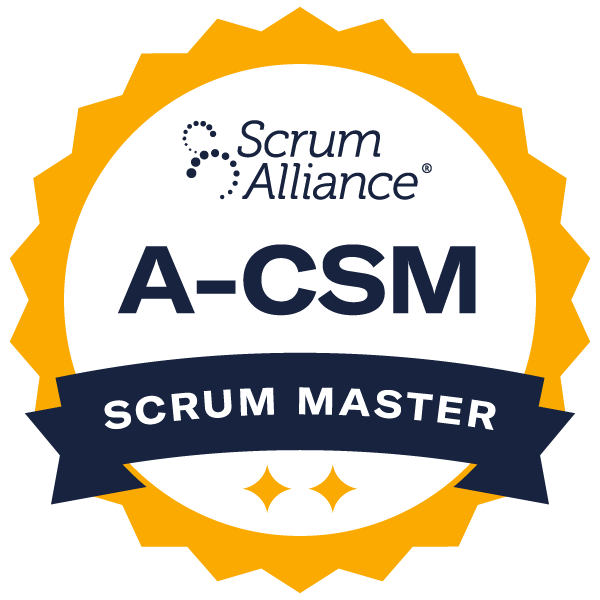
🌟 New Milestone Unlocked: Advanced Certified ScrumMaster (A-CSM) 🌟

Guess who just levelled up in the agile universe? 🚀 I’m thrilled to share that I’ve officially earned the Advanced Certified ScrumMaster (A-CSM) certification, a prestigious milestone for agile leaders, coaches, and Scrum Masters! 🏅

This journey wasn’t just about the certificate (although it does feel good to have it in my portfolio!) – it was about embracing continuous learning, stepping out of my comfort zone, and investing in my growth as a professional and as a person.

Here’s the thing: Growth doesn’t happen by accident. It happens when you choose to prioritize learning, say yes to challenges, and remind yourself that there’s always more to explore. 🌱

This journey has been an incredible deep dive into advanced Scrum practices, fostering team dynamics, facilitating agile processes, and creating environments where teams thrive and deliver value consistently.

Here are a few key takeaways from this certification:

  • The art of servant leadership: Empowering teams while giving them the space to innovate and grow.
  • Advanced facilitation techniques to navigate challenges and boost collaboration.
  • Building a culture of continuous improvement, focusing on delivering value sprint after sprint.
  • Strategies for addressing team dynamics and unlocking each team member’s potential.

This certification is more than just a badge—it’s a reflection of my commitment to continuous learning and evolving as a Scrum Master, agile leader, and team enabler. 🚀

💡 I’m excited to apply these insights to empower teams, improve agility, and help organizations achieve their goals. If you’re passionate about agile, Scrum, or leadership, let’s connect and exchange ideas!

💡 A little nudge for you:
If you’ve been thinking about that course, new technology or skill you’ve always wanted to pursue—this is your sign to go for it. Future you will thank you. 💪

💬 Let’s keep the conversation going! What’s one learning milestone you’re proud of, or something you’ve been wanting to tackle next? Drop it in the comments—let’s inspire each other! 🚀

Beyond the Code: Crafting the Perfect Test Automation Strategy

In the ever-evolving world of software development, test automation is a necessity. But effective test automation isn’t just about writing code to automate tests; it’s about creating a strategy that aligns with your team’s goals, ensures optimal coverage, and evolves with your product. Let’s explore how you can craft the perfect test automation strategy, one that goes beyond the code and truly delivers value.

Why Strategy Matters

Many teams dive headfirst into test automation, often tempted by the promise of speed and efficiency. However, without a clear strategy, automation efforts can quickly spiral into chaos. Flaky tests, redundant coverage, and maintenance nightmares become all too common. 

For example, a startup I worked with automated their entire regression suite without prioritizing critical paths. When their checkout system broke due to an API change, the automated tests failed to catch it because they were too focused on miniscule UI tests and edge cases.

The takeaway? A good strategy ensures that your test automation efforts are focused, reliable, and adaptable to change.

Step 1: Define Your Goals

Every automation strategy should start with a clear understanding of your team’s goals. Are you looking to reduce manual testing time? Improve test coverage? Speed up deployment cycles? Align your automation efforts with these objectives.

A fintech company aimed to release updates weekly without compromising quality. Their automation strategy focused on automating critical workflows like fund transfers and account creation while leaving exploratory testing to manual testers. By aligning their automation with their release goals, they achieved faster, safer deployments.

Step 2: Identify What to Automate

Not everything needs to be automated. Even if feasible, not everything would be Valuable to automate. So, we need to prioritize test cases for automation based on their :

  1. Criticality: Focus on features that are essential to your business. For instance, for an e-commerce platform, the checkout flow and payment gateway are non-negotiable.
  2. Frequency: Automate repetitive tasks, such as regression testing, to save time.
  3. Feasibility: Some tests, like those involving visual validation, might be better suited for manual testing or require specialized tools.

A SaaS team struggled with flaky UI tests for edge cases. By refocusing their automation on API-level tests and critical user journeys, they reduced test execution time and improved reliability.

Read More »

How to Build and Nurture an Effective Team to Help Your Business Grow

It doesn’t matter the industry – all business owners want to see their organization succeed over time. For many, this may mean exploring new markets or creating new essential products or services for customers. However, the real path to success relies on having a strong team to help drive a company forward.

Still, creating a highly motivated team isn’t always an easy accomplishment. It takes dedication and hard work not only to acquire the right team members but also to ensure they continuously recognize and respect their role in helping the business develop.

Thankfully, there are various proven strategies for establishing the right culture for your business and maximizing its chances of success.

Inspiring Your Team with a Compelling Company Vision

Success is defined differently by each business. While some may think success is seeing profits grow double-digit year over year, others prioritize something deeper for their organization and the individuals working in it.

For most businesses to be successful, their employees need to share the same level of passion as company leadership. Communication is an important element in helping this happen. Every team member, regardless of their role in the company, should understand how their individual efforts impact the organization’s overall goals.

When employees are able to connect the dots between their performance and the performance of the company, it helps to give them a renewed sense of purpose each day. Below are a few ways business leaders can work to make this happen:

  • Speak a Universal language – The vision you express should be clear and easily understandable to a wide range of employees. Regardless of the level of experience of each employee, everyone should be able to recognize the message being expressed and how to contribute to larger company objectives.
  • Help Bridge the Gap Between Vision and Action – While articulating your vision clearly is important, this effort alone isn’t enough. You also need to show employees exactly how their individual roles and daily tasks make a difference when achieving the goals set out for the business.
  • Lead With Integrity – One of the most influential ways for leaders to help their teams live up to a company’s vision is by doing so themselves. All business leaders should fully embody the values and principles they set out for their teams. Leading with integrity in all areas of the business helps to create a culture of authenticity and helps everyone stay accountable day-to-day.

Creating a Shared Sense of Purpose

Helping your team to have a shared sense of purpose is an important component of helping your company vision come to life. When everyone works together to achieve the same goals, more is able to be accomplished and milestones are more easy to attain.

One of the best ways to create a shared sense of purpose is by encouraging employees to get involved as much as possible. This means making sure they feel valued enough to regularly share their ideas, ask questions, and contribute more toward shaping the business.

Another important element of getting employees involved more is creating knowledge-sharing opportunities. To do this, you could create specific communication channels across your organization where employees can more freely exchange new ideas or simply celebrate each other’s successes.

Unifying everyone in the company is an important part of sharing a broader purpose. This is why looking for more opportunities to bring everyone together and discuss new challenges, opportunities, successes, and even failures is a great way to help everyone feel like they’re part of something significant.

Equipping Your Team for Success

Read More »