Training on Selenium – CP-SAT Certification Batches @Bangalore

CP-SAT stands for “Certified Practitioner – Selenium Automation Testing” is a certification prepared and honoured by “Agile Testing Alliance” & “University Teknologi Malaysia (UTM)”, which is the Selenium training course I have been conducting in Bangalore. We conducted a public batch over the last weekend as well as a corporate batch this month where participants got to build, enhance and maintain the scripts in Eclipse IDE and Selenium 3.x WebDriver.

Training Approach:   This course is designed to train agile professionals with the basics of testing web applications using Selenium leading to advanced topics. I approached the training as a combination of theory as well as hands-on execution of scripts using the features of Selenium with ample time given to practice and kept the focus on the practical application of Selenium to resolve common web automated testing challenges.

Agenda: This course focuses on latest Selenium 3.x, its advantages,  WebDriver 3.x configuration and execution related concepts using JUnit and TestNG frameworks, Selenium Reporting mechanism, Data Driven Testing, getting started with Selenium Grid concepts, handling various types of web elements, iframes, dynamic lists etc. To know more about course syllabus – please click here

Course Schedule: The course consists of 3 full days of training, hands on assignments and practical, continuing on later with 5 days of 2-hour web sessions live with the trainer for more learning and queries and clarifications. Thereafter the candidates are given a mock exam to attempt which gives an idea about the real certification exam. The final exam consists of 2 sections – Theory which is Online Objective type Quiz and Practical which a 2 hour exam with given case studies implementation and submission.

We have received tremendous response from the CP-SAT training batches and many more interested candidates for upcoming scheduled training sessions at Bangalore.

Here is a sneak peek into the training room and also some wonderful feedback shared by our candidates-

Public CP-SAT Batch @Bangalore

Corporate CP-SAT Batch @Bangalore

If interested please check the upcoming batches calendar at – http://ataevents.agiletestingalliance.org/

Happy Learning!
Nishi


Better Software Design Ideas for the Hawaii Emergency Alert System

Continuing the discussion on the Hawaii Missile Alert which made headlines in January 2018 and turned out to be a false alarm and ended up raising panic amongst almost a million people of the state all for nothing, (read here for detailed report) I would like to bring back the focus on implications of poor software design leading to such human errors.

Better software design is aimed at making the software easier to use, fit for its purpose and improving the overall experience of the user. While software design focuses on making all features easily accessible, understandable and usable, it also can be directed at making the user aware of all possibilities and implications before performing their actions. Certain actions, if critical, can and should be made more discrete than the others, may have added security or authorisations and visual hints indicating their critical nature.

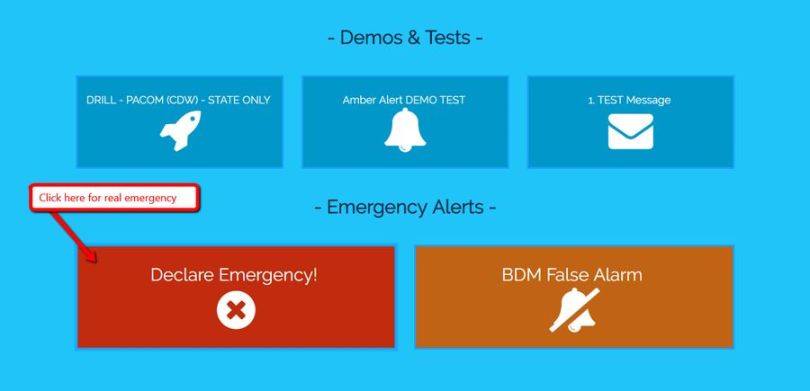
Some of the best designers at freelancer.com came together to brainstorm ideas for better software design and to revamp the Hawaii government’s inept designs. They ran a contest amongst themselves to come up with the best designs that could avoid such a fiasco in future.

Sarah Danseglio, from East Meadow, New York, took home the $150 grand prize, while Renan M. of Brazil and Lyza V. of the Philippines scored $100 and $75 for coming in 2nd and 3rd, respectively.

Here is a sneak peek into how they designed the improved system :Read More »

Paying Off the Technical Debt in Your Agile Projects

Just as you should not take out a financial loan without having a plan to pay it back, you should also have a plan when incurring technical debt. The most important thing is to have transparency—adequate tracking and visibility of the debt. Armed with the knowledge of these pending tasks, the team can devise a strategy for when and how to “pay off” technical debt.

Learn about managing your technical debt and testing debt in agile teams and share your thoughts on my latest article published at www.stickyminds.com and also at www.agileconnection.com

***** Here are some excerpts from the article for my readers***

Technical debt initially referred to code refactoring, but in today’s fast-paced software delivery, it has a growing and changing definition. Anything that the software development team puts off for later—be it smelly code, missing unit tests, or incomplete automated tests—can be technical debt. And just like financial debt, it is a pain to pay off.

Forming a Plan to Pay Off Technical Debt

Let’s say a development team working on a new project started out following a certain programming standard. They even set up an automated tool to run on the code periodically and give reports on the adherence to these standards. But the developers got busy and stopped running this tool after a sprint or two, and when the development manager asked for a report after a couple of months, there were hundreds of errors and warnings, all of which now need to be corrected.

This scenario happens all the time with agile teams focused on providing as much customer value as possible each sprint. The problem then needs to be fixed immediately, because despite having all the functionalities in place, the team doesn’t want to release code that is not up to production standards.

The team is then faced with a few options for how to service the debt:

  • Negotiate with the product owner on the number of user stories planned for the upcoming sprint in order to have some extra time for refactoring the code
  • Dedicate an entire sprint to code refactoring
  • Divide all errors and warnings among the development team and let them handle the task of corrections within the next sprint, along with their regular development tasks, by scheduling extra hours
  • Plan to spread this activity over a number of sprints and have a deadline for this report before the end of the release
  • Estimate the size of refactoring stories and either plan them into upcoming sprints as new user stories or accommodate them as part of existing user stories

Though these are all viable options, the best approach depends on the team, the context, upcoming deadlines, the risk the team is willing to take, the highest priority for functionalities that need to be shipped, and the collaboration with the product owner.

Again, just like when you take out a financial loan, you should plan to pay off technical debt as quickly as possible using the resources you have. It’s a good idea to perform a risk analysis of the situation and reach a consensus with the team about the best approach to take.

Technical Debt in Testing

Technical debt doesn’t occur only in programming. Testing activities are also likely to incur technical debts over time due to a variety of factors, including incomplete testing of user stories, letting regression tests pile up for later sprints, not automating essential tests every sprint, not having complete test cases written or uploaded to test management tools, not cleaning up test environments before the next iterations, and not developing or testing with all test data combinations on the current features.

Sometimes debt may be incurred intentionally for a short term, such as not updating tests with new test data when testing on the last day of the sprint due to a time crunch, but planning to do it within the first couple of days in the next sprint. As long as the team has an agreement, it’s acceptable to defer some technical debt for a short while.

On occasion, debt may be incurred intentionally for a longer term by planning it in advance, such as deciding to postpone any nonfunctional tests, like performance or security-related tests, on the system until a few sprints are out and features are stable enough to carry out the tests. Again, as long as the team agrees with the risk and has a plan to address it, it is fine to defer certain activities.

Testing technical debt can get us out of tight situations when needed, but you still need to ensure that you plan carefully, remain aware of the debt, communicate it openly and frequently, and pay it off as soon as possible. Having a plan to service these debts reduces your burden over time and assures your software maintains its quality.
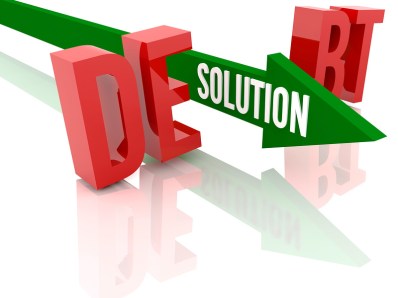
Debt-Solutions

Prevention Is Better Than Cure

Avoiding having any technical debt is always preferable. As the saying goes, an ounce of prevention is worth a pound of cure.

Every team has to devise its own strategy to prevent technical debt from accumulating, but a universal best practice is to have a definition of “done” in place for all activities, user stories, and tasks, including for completing necessary testing activities. A definition of “done” creates a shared understanding of what it means to be finished so that everybody involved on the project means the same thing when they say it’s done. It becomes an expression of the team’s quality standards, and the team will become more productive as their definition of “done” gets more stringent.

Here’s a good example of criteria for a team’s definiton of “done” for every user story they work on:

  • All acceptance criteria for the user story must be met
  • Unit tests must be written for the new code and maintain a 70 percent coverage
  • Functional tests must be performed, and exploratory tests must be performed by a peer tester other than the story owner
  • No critical or high severity issues remain open
  • All test cases for each user story must be documented and uploaded in the test management portal
  • Each major business scenario associated with the user story must be automated, added to the regression test suite, and maintain a 70 percent functional test coverage

Verifying that the activities completed meet these criteria will ensure that you are delivering features that are truly done, not only in terms of functionality, but in terms of quality as well. Adhering to this definition of “done” will ensure that you do not miss out on essential activities that define the quality of the deliverable, which will help mitigate the accumulation of debt.

Despite best practices and intentions, technical debt often will be inevitable. As long as the team is aware of it, communicates openly about it, and has a plan in place to pay it off as quickly as possible, you can avoid getting in over your head.

*************

‘INVEST’ing in good User Stories

User stories are the requirement specifications in their simplest form. Methodologies like Scrum use User story format to express the functional requirements of the software to be developed as –

As a <user persona>, I want to <do the action> so that <need of function>

This creates a deeper understanding of the behavior from a user’s perspective along with the business need and reason for the function, thus making the development of software easier.

But writing effective user stories isn’t as easy as it sounds. There are a lot of questions to be answered, like which functionality is one user story and which is too big and needs splitting up; what is the true sense of the user story; how to best express the functionality in words; which user personas are to be considered etc.

Getting the user stories right is an essential step to success of the sprints in agile, and for the teams struggling with it we have the INVEST principal as a guideline to be followed. This principal gives the attributes of a user story to be considered when writing and defining them so that they can make a robust foundation to our product backlog. Let us look at the principle in depth –

I – Independent

Means that each user story must be Independent as a functionality and be deliverable

N – Negotiable

Means that the user story be negotiable in terms of implementation, which necessarily means that the implementation details or ‘how’ to do the functionality must not be specified in the user story. User story must be business need and customer experience story.

V – Valuable

Means that the user story must create value for the customer. We should be able to see the reason and way the function will be valuable to the customer and this can be gauged by direct communication with the stakeholders, and can also be quantified in terms of ‘business value’ that we can associate with each story.

E – Estimable

Means that the User story must be clear and concise enough so that we can estimate the amount of work required to achieve it with accuracy. Any unclear parts, missing information or discrepancies must be clarified before we can finalise a user story to be taken up for development.

S – Small

Means that each user story must be a small chunk or slice of work. The development of one user story must be doable within one sprint and hence anything bigger than that would need to be further split down.

T – Testable

Means that each user story must be testable as a feature and have a unique new function get added to the product.

Letter Meaning Description
I Independent The user story should be self-contained, in a way that there is no inherent dependency on another user story.
N Negotiable User stories, up until they are part of an iteration, can always be changed and rewritten.
V Valuable A user story must deliver value to the end user.
E Estimable You must always be able to estimate the size of a user story.
S Small User stories should not be so big as to become impossible to plan/task/prioritize with a certain level of certainty.
T Testable The user story or its related description must provide the necessary information to make test development possible.

Keeping these points in mind when designing and formalising our team’s user stories will ensure that the sprint runs smoothly without unforeseen scenarios, glitches in implementation due to unclear requirements and re-work due to frequent changes.

Have more questions? How to achieve this?

Stay tuned for the next article where we will look at the steps to achieve the best user stories.

Happy Testing!
Nishi


Innovation Games – Part 2 – Speed Boat

Hey There!

Hope you enjoyed the first part of our series on “Innovation Games”!

The next Innovation Game in our series is “Speed Boat”. This is a fun way to do retrospectives and feedback meetings where there is need for all team members to voice their opinions in an open and anonymous way. This method reduces the duration of the meeting to almost one half and gets better results which may indeed be very useful for the improvement of the agile team.

Game Objective:

  • To find the impeding and the helping factors in achieving any goal. It can be used as a fun way of doing retrospectives, as it engages the team and brings out the concern areas.

Method:

  • Let’s take one iteration or sprint for retrospective. Draw a boat with a Sail on front end and Anchors pulling it down at the back end.
  • All participants are given post-its to write down the factors that they think helped them move faster and post them on the sails; the factors that impeded their speed in that iteration and post them on the anchors.
  • We may also look for the desired factors which may help more in future and label them as the wind.SpeedBoat

Analysis:

This feedback may be saved by just keeping a picture of this chart for revisit in the next sprint , or by saving the post-its as notes.The take-away would be to keep checking in the next sprints that we—

  • Minimize the anchors
  • Maximize the Sailing factors
  • Try and bring in the wind factors in the next iterations

This is a very useful tool to bring in better results from our retrospective meetings , give it a try in your agile team and let us know how it worked out!

Cheers,

Nishi

Pesticide Paradox in Software Testing

Pests and Bugs sound alike?? They act alike too!! 

Boris Beizer, in his book Software Testing Techniques (1990) coined the term pesticide paradox to describe the phenomenon that the more you test software, the more immune it becomes to your tests.

Just like, if you keep applying the same pesticide, the insects eventually build up resistance and the pesticide no longer works. Software undergoing the same repetitive tests build resistance to them, and they fail to catch more defects after that.

  • Software undergoing the same repetitive tests eventually builds up resistance to them.
  • As you run your tests multiple times, they stop being effective in catching bugs.
  • Moreover, part of the new defects introduced into the system will not be caught by your existing tests and will be released onto the field.

Solution: Refurnish and Revise Test Materials regularly

In order to overcome the pesticide paradox, testers must regularly develop newer tests exercising the various parts of the system and their inter-connections to find additional defects.

Also, testers cannot forever rely on existing test techniques or methods and must be on the look out to continually improve upon existing methods to make testing more effective.

It is suggested to keep revisiting the test cases regularly and revising them. Though agile teams provide little spare time for such activities, but the testing team is bound to keep planning these exercises within the team in order to keep the best performance coming. A few ideas to achieve this:

  • Brainstorming sessions – to think of more ideas around the same component testing
  • Buddy Reviews – New joinees to the team are encouraged to give their fresh perspective to the existing test scenarios for the product, which might get some new cases added.
  • Strike out older tests on functionalities that are changed / removed
  • Build new tests from scratch if a major change is made in a component – to open a fresh perspective


UPDATE–

This article has been recommended and used as a reference by HANNES LINDBLOM in his blog at https://konsultbolag1.se/bloggen/veckans-testartips-15-tur-genom-variation