Metrics your Agile team should & should not be tracking!

Agile teams are constantly running toward goals, requiring constant planning, monitoring, and re-planning. Metrics can help support these efforts by providing useful information about the health and progress of the project.

There are a few common metrics we use in agile teams: sprint burndown charts, release burnup charts, team velocity. Theyโ€™re common because they communicate practical information, but theyโ€™re not the only metrics we can employ.

In my recent articles for TestRail blog, I described 3 Uncommon metrics you can easily create that will be very useful for your agile team. I also wrote about 3 Metrics that are not useful and you must stop using now!

Here are the posts–>

Three Uncommon Metrics Your Agile Team Should Be Tracking

Here I described 3 most useful metrics –

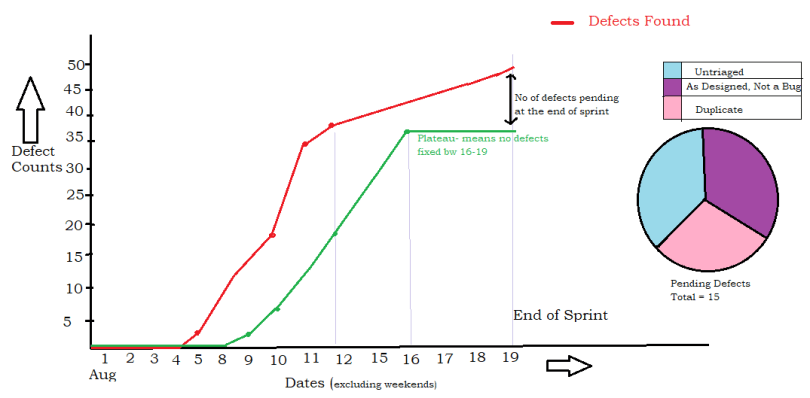
Defect Health

Defect Health Chart

Test Progress

Metric for weekly test progress

Build Failures

Sprint-wise metric for No of Build Failures

Click here to read the complete article —>

Three Metrics Your Agile Team Should Stop Using

Metrics are supposed to help and support an agile team by providing useful information about the health and progress of their project. But not all metrics are always beneficial. Going overboard with them can sometimes cause more harm than good.

In this post I have described three metrics that can impede your agile team instead of motivating you.

  • Defect Counts
  • Hours
  • Lines of Code or Defect Fixes per Developer

Click here to read the complete article–>

Please share your experiences with metrics and how they helped or impeded your progress!

Cheers

Nishi

Overcoming Barriers to Effective Communications in Agile Teams

Communication is the foundation of success for an agile team. Agile teams need to set up effective communication channels and have a culture of constant communication for complete transparency.

However, there are often several challenges that act as barriers to productive communication and may lead to people problems as well as delayed or failed projects. In my article for TestRail https://blog.gurock.com/agile-barrier-communication/ , I have discussed some of the most common barriers to effective communication for agile teams, as well as how you can overcome them.

  • Physical Barriers
  • Cultural and Language Barriers
  • Emotional Barriers
  • Perceptual Barriers

Read the complete article here ->

Agile teams require constant communication, so it immensely benefits the team to recognize their barriers to effective communication and take some measures to overcome these barriers. Every step taken in this regard leads the team farther down their path to true agility.

The Agile Mindset: Cultural Changes for Successful Transformation

Agile transformations can be a challenging undertaking, and many organizations struggle with what is probably the hardest part of the transition: adopting an agile mindset. It is imperative that teams embrace the agile culture before they can fully embrace agile.

Letโ€™s discuss the major cultural shifts needed for a successful agile transformation. Full article-> https://blog.gurock.com/agile-mindset/

Collaborating to Make Decisions

As I always like to say, agile is more a mindset than a process. It guides you to a better way of working and collaborating in order to deliver the most value to your users. But how you choose to implement those guidelines is up to you, and most teams coming from a traditional style of software development find this aspect the most challenging.

Teams are left to find ways to work together rather than having a process forcing them to do certain actions, follow certain processes, or organize specific meetings. There are no templates or techniques to adhere to and no rules to follow strictly.

This may come as a surprise and leave teams guessing since they are used to being told what to do and how. Agile drives them to think on their feet as they plan and replan their way through the development process. Read More–>

Being Comfortable with Visibility & Exposure

Agile gives everyone a voice and values every personโ€™s opinion. Many teams have been used to only the manager speaking for them or having one representative in most meetings. As a result, some team members may feel flustered now that theyโ€™ll occasionally be in the spotlight. People who are not used to voicing their opinion are expected to speak in all forums. Hiding behind the team is no longer an option in agile.

This also means team members are valued as individuals and everyoneโ€™s contribution is recognized. Agile treats all team members as equals, whatever their role or designation. They are expected to estimate their own tasks, pick things to work on, collaborate with other team members, and provide value by the end of each iteration. Continue Reading–>

Read More »

3 ways Agile testers can use Walkthroughs

A walkthrough is a great review technique that can be used for sharing knowledge, gathering feedback and building a consensus. Typically, walkthroughs take place when the author of a work item explains it in a brief review meeting โ€” effectively walking the team through the work โ€” and gathers peopleโ€™s feedback and ideas about it. These meetings may be as formal or as informal as needed and may also be used as a knowledge-sharing session with many relevant stakeholders at once.

In my article published at https://blog.gurock.com/tester-agile-walkthrough/ , I have discussed three ways agile testers can make use of this type of review for their sprint- and release-level test plans and test cases to get the entire team involved in the quest for quality.

I have also discussed how I have used walkthroughs in my agile team as a mechanism to review our sprint test scenarios with the entire Scrum team. The main areas of application are-

  • Defining Scope
  • Generating Test Ideas
  • Building a Consensus

Click here to read the complete article–>

Walkthroughs are a quick and easy review technique to adopt, and they can be especially useful for testers on an agile team to get reviews on their test plans, test cases, and scripts. Give this technique a try, even if in an informal sense, and see how beneficial it can be!

Components of a Defect Management Software

 Since software developers and testers work together in the Agile and DevOps environments, it gets challenging to cope up with the increasing competition. Development teams work in collaboration with various stakeholders to make the most of the testing efforts. Defects in software applications are a norm, the sooner you realize that better it is. It is impossible to have a 100% defect/error-free software application, but experts work to make the most of their efforts. The current need for faster delivery and quality products calls for robust software testing solutions that can meet customer expectations.

A defect management system is a defect repository where all the defects appearing in a system are identified, recorded and assigned for rectification. This system includes defect management software and defect management tools to achieve projects efficiently. 

How Does Defect Management Work?

A defect management system works in a systematic manner, and records all the defects in the system without duplicating defects, and maintaining a log for future use too. There are different steps involved in the defect management that are explained below–

Read More »

What can you learn from the defects you found?

The bugs we find during testing can tell us a lot about the application, the state of its quality and its release-readiness. Bugs can also provide insights into our development processes and practices โ€” and lapses therein.

How can we study bugs to improve the overall state of our project? In my article published @Gurock TestRail blog, I have described three things to learn from the bugs you find. https://blog.gurock.com/three-learn-bugs/

 The location of defect clusters

Defect clustering is one of the seven principles of software testing, and keeping an eye out for these clusters is the responsibility of a good tester.

As we log defects into a tracking tool or portal, teams generally follow the practice of measuring relevant modules, components or functional areas against each defect. When tracked over time, this information can be real gold! It helps us track which areas of the application are having more bugs.

Read More »

What the NAPLAN Fail Tells Us About Testing in Education?

Implications of Software Testing in the field of Education

The National Assessment Program – Literacy and Numeracy (NAPLAN) are school tests administered to Australian students. This August, the online program was offered to 1.5 million students. Students failed to log on. 

Had the software undergone functional testing, the program could have launched successfully. A functional testing company verifies every function of the software function as per requirements. It is a black box type of testing where the internal structure of the product is not known to the tester.

Functional and Performance Issues – Naplanโ€™s problem has been ongoing. In March, it took students 80 minutes to get to online tests. The requirement was of 5 minutes. The software performed shockingly different from what was planned. 30,000 students had to retake tests, which too were marred by technical glitches. The test data was not automatically saved. The data recovery time was 15 minutes compared to the requirement of zero minutes. Once again, the software did not perform as expected. Eventually, the problem was resolved, however, it came at the expense of dropouts and time lags. 

Accessibility Issues – Naplan software had other errors that a functional testing company could have taken care of. The features that were designed for students with disabilities were not functional. Alternate text for students was missing, incorrect and inaccessible for students with auditory disabilities. The color contrast was poor. The color contrast was of immense importance to those who required accessibility help with seeing visuals. 

In the Naplan case, a functional testing company would prepare several test cases to verify the functionality of the login page, accessibility features, load times and data recovery times against the requirements specified. Functional testing would cover unit testing, integration testing, interface testing, and regression testing. In addition to manual testing, a functional testing company would perform automation testing. Software testing tools automate tests to improve the accuracy and speed of execution.

Read More »

Scrum, Kanban & Scrumban – What’s the difference?

Agile is a big umbrella that covers a number of different approaches, and there is always scope for more. There are so many flavors because agile is a mindset that allows flexibility in its processes. Two of the more popular approaches are Scrum and Kanban.

Scrum and Kanban apply agile principles in their own way to empower effective delivery cycles. โ€œScrumbanโ€ is a term coined for a hybrid approach making use of both Scrum and Kanban principles.

In my article published at Testrail , I have explore the differences among the three methodologies – Scrum , Kanban and Scrumban. Check it out and see which of these methodologies may be right for you. https://blog.gurock.com/scrum-kanban-scrumban/

Here is a brief about the 3 methodologies –

SCRUM

Scrum is the most popular agile framework. It is iterative and incremental in nature and focuses on tight delivery timelines. The release time frame is split into small iterations called sprints. Work items are planned for each sprint in the form of user stories and tasks, which are prioritized based on value. Teams are small, cross-functional and self-organizing, with a product owner, a ScrumMaster and the development team.

Scrum provides channels for communication through ceremonies such as the sprint planning meeting, the daily standup meeting, the sprint demo, and the sprint retrospective, all of which contribute to the overall pace and a flexible approach to software development.

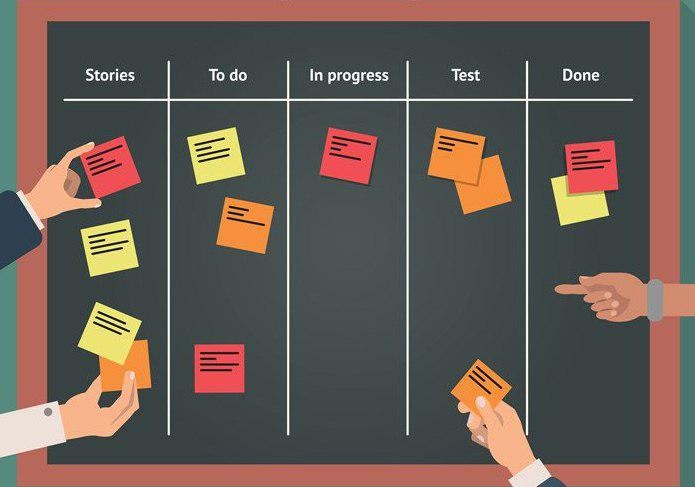
Scrum Task board

KANBAN

Kanban is focused on continuous delivery based on lean principles. Itโ€™s based on the flow of work and just-in-time delivery and promotes process improvement. Kanban aims to eliminate waste, increase productivity and efficiency, and have flexibility in production. The main goals are to limit work in progress (WIP), avoid multitasking and recognize bottlenecks.

Read More »

4 ways Task boards can help Agile teams

A task board is a physical or virtual chart containing all current team tasks at hand and their progress over time. For an agile team, all sprint tasks can be represented on the task board, and their flow over various stages can be tracked in the daily standup meeting. Task boards are a great way to visually representing pieces of work and their status.

Besides helping to organize and track work and being the focal point of the iteration and relevant meetings, task boards can have numerous more benefits for an agile team. In my article published @Gurock, I have discussed four additional ways in which Task boards can help an agile team-> https://blog.gurock.com/agile-task-boards/

Different styles of Task boards

Main points discussed–>

  • Customize the process
  • Visualize their Scrum
  • Improve Commitment and visibility
  • Facilitate Team interactions

Click here to read more ->

‘Co-opetetion’ Among Agile Team Members

Agile focuses on motivated individuals acting together toward a common goal. Consequently, agile needs people to collaborate and requires complete transparency, communication, and cooperation, within and across teams. But at the same time, individuals instinctively try to outperform others in order to stand out in their teams.

This transition from individual responsibility to collective ownership is often the hardest part of the cultural shift that teams face when adopting agile. I have looked at ways to encourage healthy competition, more cooperation, and a sense of community among agile teammates in my latest article for Gurock – TestRail blog, the main points being-

  • Showing People the part they played
  • Have Co-workers appreciate each other
  • Measuring personal growth
  • Motivating with extra initiatives
  • Encouraging Collaboration and healthy competetion

Check out the complete article at – https://blog.gurock.com/agile-co-opetiton/ to find ways to encourage healthy competition and better team dynamics in your agile teams!